Discovering Your Voice
An Excerpt from Dim Sum and Faith
By Jenn Suen Chen
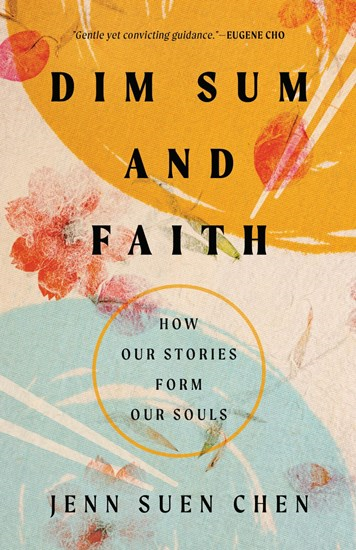
The following excerpt is adapted from Chapter 11 of Dim Sum and Faith by Jenn Suen Chen. Dim Sum and Faith invites you to examine the phases of your life—shaping, undoing, awakening, and reshaping. Through guided scripture reading and reflective prompts, each chapter becomes a steppingstone toward understanding the profound ways God’s presence is woven through every joy and trial in your story. The book is available at InterVarsity Press.
HARNESSING THE POWER OF OUR STORY
As we learn how to tell our story with God, our voice becomes our superpower and points people to Jesus. It’s not just about knowing our story; it’s about telling it with the voice we have been given. This all stands in contrast to believing the lie that we don’t have a voice, that we don’t have anything to say, or worse, that we don’t have anything to bring into the world. We do have something to bring. Ultimately, we are to use our voice not for our own gain or glory but for praise: “So I will not be silent; I will sing praise to you. Lord, you are my God; I will give you thanks forever” (Psalm 30:12 GNT).
Silence was my way of staying safe. I have a track record of giving up things I have wanted. After I got the lead role in the high school play my senior year, I gave it to another student who seemed to want the role more. She’d always played the lead since kindergarten, so “what was this Asian girl doing taking my spot?” she asked. I’ve heard that in my head multiple times over the decades. I passed up a student leadership role I earned to another student who expressed he’d be better than me for the job. He’s probably right, I reasoned. I didn’t seem to want or need it as much as he did. I thought that giving it up was surrender and thus godly.
In giving up my wants, needs, and dreams, I figured I could always find other things to do. I believed the lie that it wasn’t my place to take up space. My gender, my culture, my faith—it all felt out of place, unwanted, and unneeded. I learned to minimize my voice and physical presence to leave room for others. In some ways, this sounded confusingly biblical because of the scriptural imperatives around “dying to self ” and “less of me.” Without a place to ask the necessary theological questions, it just felt right to give it all up. Finding out what I wanted was hard when I was used to giving up space, time, and dreams for others who had more power, bigger opinions, and greater confidence.
Sometimes the expectations within certain Christian circles put more of an emphasis on certain virtues for women. All of those biblical character values should extend to both men and women. Some cultures give full freedom to men to be as they like but do not extend that same grace to women. Asian American women historically haven’t been given much of a voice. As a petite Asian American woman with a soft-spoken voice, I’m often asked to speak up. People may not consider that I’m trying but it’s just too loud to hear me, or perhaps this is just what my voice sounds like. This complex nuanced cultural reality that many of us live in, both inside and outside the church, can add to the challenge of finding and using our voice.
The reality is that how we feel on the inside doesn’t always match how people perceive us on the outside. When we show up in our embodied presence, we meet each other as we are. This means that as we show up, we are aware of our emotional and physical self, and we can be present and honest in the moment.
WHAT DO WE DO WITH WORDS?
I recently attended a retreat for leaders of color, where we were asked to write down blessing or crushing words that have been said over us. I found this to be a difficult assignment. I had learned to dismiss words of blessing because my culture had taught me to deflect compliments as a form of humility. I’m better at sharing all the things I don’t know or don’t do well. I also learned to redirect words as a form of self-protection. If I did that, the words could not sink in, hurt me, or make me too proud. Or so I thought.
What do we do with words that reach in and shake our foundation? As we learn to name them, we can do this with Jesus. We can bring him those words and the emotions we feel around them, and let him take those words from us and speak his words of grace and truth over us. We need to hear what he thinks of us. We must receive our identity first from God. As Sheila Wise Rowe writes, “When we uncover and share our entire story, we start to see big and small things to be grateful for, and we are reminded that God has not forgotten us.”
We also need God to show us when and where to use our voice. Scripture has many things to say to us about the power that our words carry. Our voice has the ability to amplify voices that aren’t often heard and bring about change: “Yes, speak up for the poor and helpless, and see that they get justice” (Proverbs 31:9). Queen Esther was called to use her voice to save her people: “If you keep quiet at a time like this, deliverance and relief for the Jews will arise from some other place, but you and your relatives will die. Who knows if perhaps you were made queen for just such a time as this?” (Esther 4:14). We all have been placed in various areas of influence. Think about where God might be inviting you to use your voice.
I have discovered my voice doesn’t sound like anyone else’s. As an Asian American woman who hasn’t always known my importance and worth, hearing what God thinks about me daily has changed the way I live.
©2025 by Jenn Suen Chen. Used by permission of InterVarsity Press.
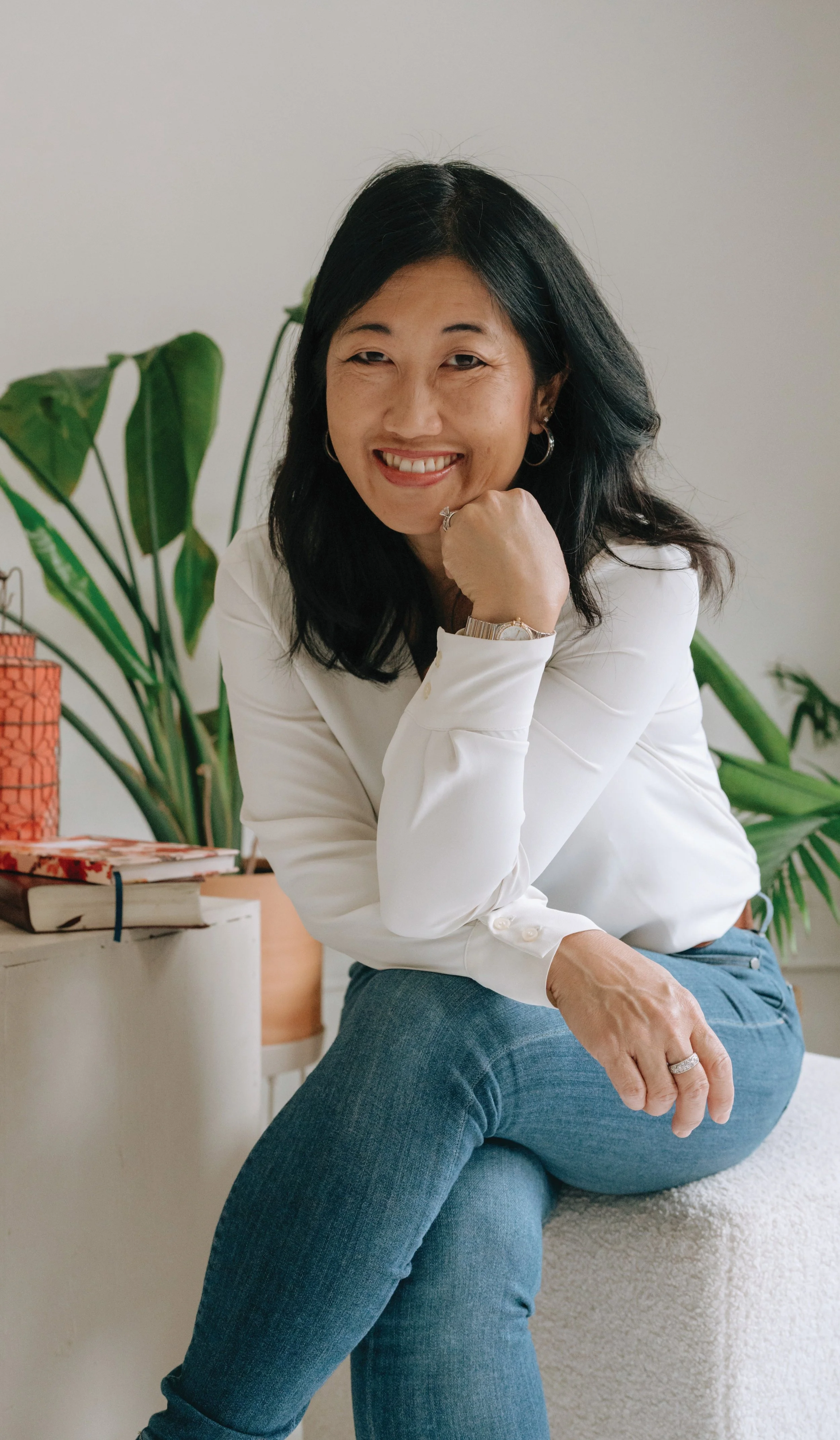
Jenn Suen Chen is a spiritual director, speaker, and leader in the area of spiritual formation and cross-cultural ministry. She is the co-director of Summit Clear (with her husband, John), an organization focused on providing spiritual direction, mentoring, and leadership coaching for those in cross-cultural work. She serves with Pioneers and spent twenty-five years living in Asia raising her family. Jenn and John have four adult children and live in the Pacific Northwest.
More Like this:

Help us continue the work of empowering voices. Give today.