
Featured
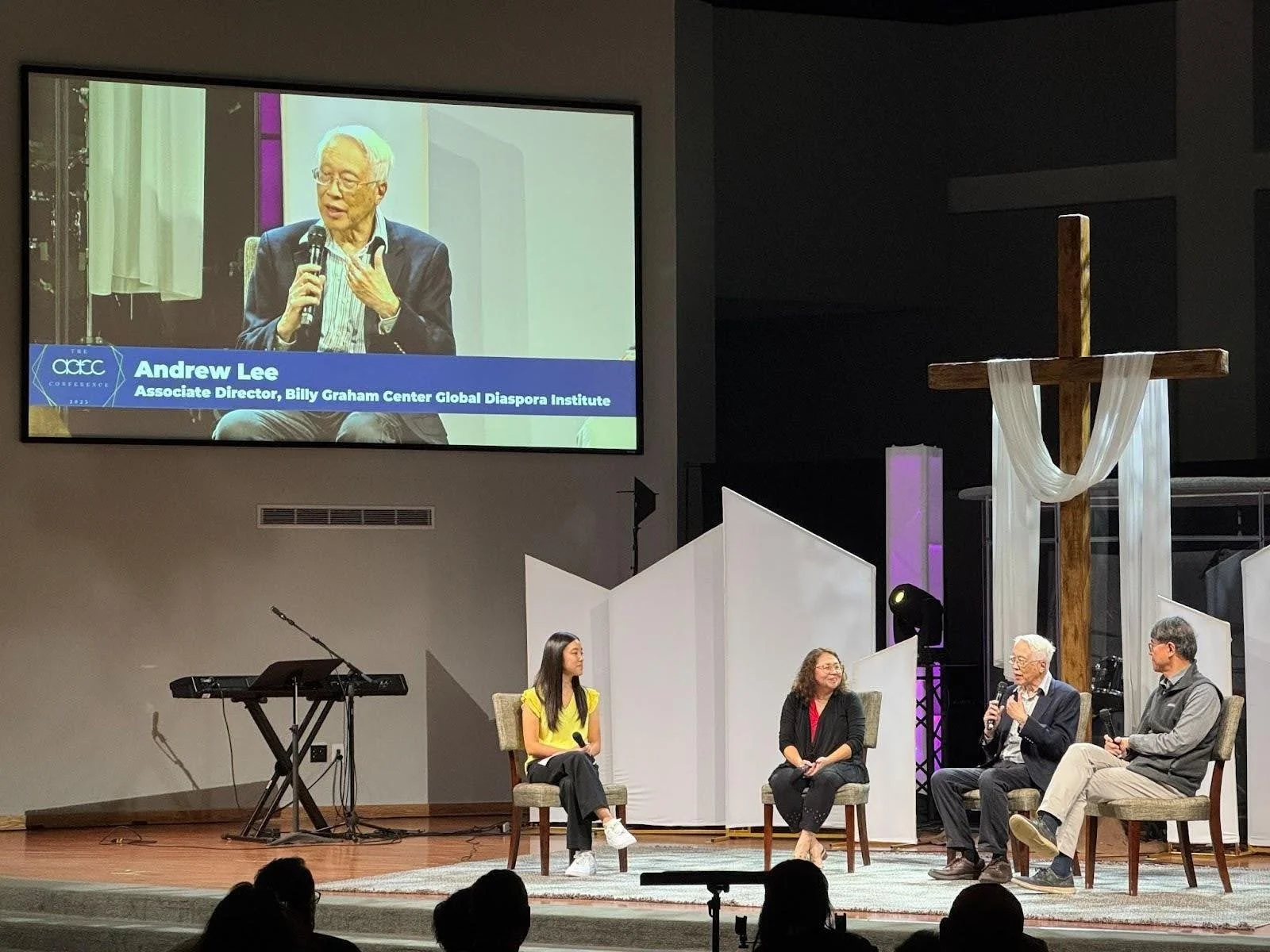
In October 2025, hundreds of people from all over North America gathered for three days in Washington D.C. at the first ever national conference hosted by the Asian American Christian Collaborative (AACC) at Open Door Presbyterian Church.
Latest
In October 2025, hundreds of people from all over North America gathered for three days in Washington D.C. at the first ever national conference hosted by the Asian American Christian Collaborative (AACC) at Open Door Presbyterian Church.

Jesus’ life reflects the minjung (민중) of human history, life born in and concluding in unjust suffering. Incarnate Jesus resembles the deepest suffering of the immigrant experience within the diaspora of Asian Americans and beyond.
When I first read about Jacob and his uncle Laban in Genesis, I did not see Laban as anything but a villain. But now, years later, as I reflect on my South Asian culture and the culture of Jacob’s time, I find that I have questions about who Laban is.
Search Our Resources
By Asian American Christians,
for Asian American Christians,
about Asian American Christians.
Read compelling stories, rich theology, and thoughtful reflections from our community in our weekly newsletter. Sign up and be the first to get new content, updates, and resources pertaining to Asian American Christians.
What’s happening at AACC
In October 2025, hundreds of people from all over North America gathered for three days in Washington D.C. at the first ever national conference hosted by the Asian American Christian Collaborative (AACC) at Open Door Presbyterian Church.

We've inherited a vision of work that prizes achievement, esteem, and productivity above all else. But Scripture tells us something different. Work is about worship, service, and faithfulness. And the gap between those two visions is exactly what the Parable of the Talents in Matthew 25:14–30 invites us to reckon with.
Over the years, I’ve greatly benefited from the friendships I’ve made within AACC, especially as I’ve found other Asian American Christians pursuing a multi-faceted holistic discipleship—holism with the biblical view of the kingdom of God, and holism in integrating our Asian American identities with our faith.
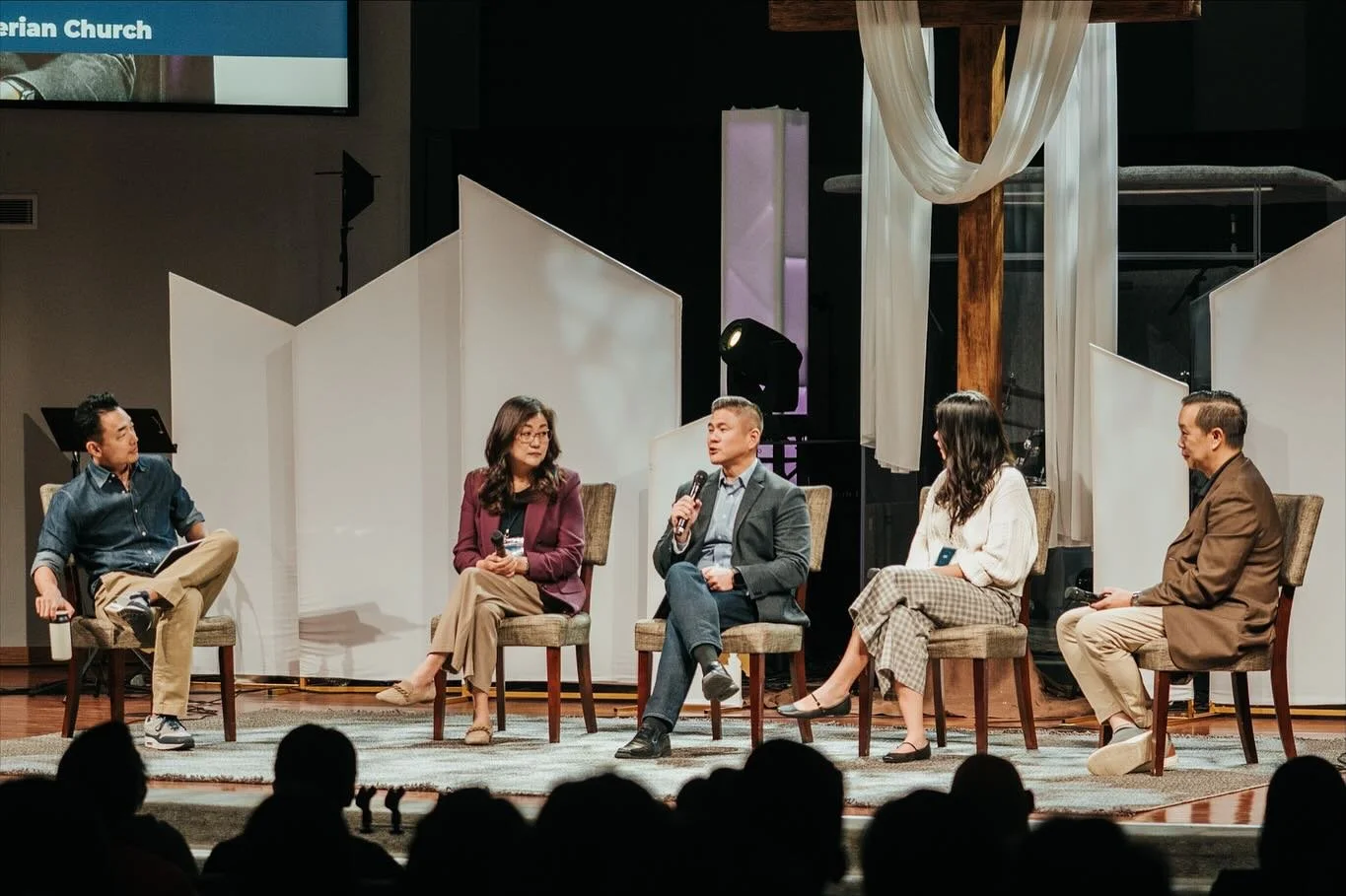
Asians from all sorts of ethnic backgrounds, immigration stories, denominations, and contexts came together as one body—distinct, yet unified by a common faith and shared heritage.

One of my favorite stories is Akira Toriyama’s manga/anime Dragon Ball. Loosely inspired by the novel Journey to the West, Dragon Ball follows a young boy named Son Goku, who enjoys martial arts which helps him to fight strong opponents and push his limits. While Dragon Ball never explicitly states its Asian setting, Toriyama prominently features Asian food, martial arts, and characters with dark hair and eyes. These examples may sound simple, but my younger self, who grew up on white superheroes like Superman, instantly felt a deeper connection to Goku as I experienced Asian representation for the first time.

do not forget
the ropes
suffocating the necks of
the Chinese
who sing the song of ages:
we can’t breathe.

Somehow learning that I have an Asian American accent felt fitting after learning snapshots of history. As if I inherited an unexpected gift or was mysteriously re-connected to the Asian Americans who came before me and struggled the same way. While I’ll probably always fumble over Korean, I know that regardless of my proficiency in Korean or English, I belong here.

When Asian Americans show up and take their seat at the table, they can influence and enact policies that promote justice and equity for their community.

I have never attended a conference specifically designed to speak to the needs and concerns that pertain to me as an Asian American Christian parent . . . it was so refreshing to have our experiences as Asian American Christians centered in the conversations.

But we must also pray that God moves citizens and elected officials alike to not hide behind “thoughts and prayers” but courageously pursue policies that reduce the scourge of gun violence in our communities.
Spring 2026 Series: Asian American Interpretation of Scripture
Jesus’ life reflects the minjung (민중) of human history, life born in and concluding in unjust suffering. Incarnate Jesus resembles the deepest suffering of the immigrant experience within the diaspora of Asian Americans and beyond.
When I first read about Jacob and his uncle Laban in Genesis, I did not see Laban as anything but a villain. But now, years later, as I reflect on my South Asian culture and the culture of Jacob’s time, I find that I have questions about who Laban is.

I have carried these two perspectives, those of my tito and my classmates, with me for many years, trying to discern the right way to respond. The painful reality has been that biblical passages such as Rom. 13:1–7 have been used to justify the horrors of colonialism; by right of conquest, the imperial powers were granted the divine right to rule.
Asian Americans who are not fully bilingual understand Moses’s dilemma and can identify with his situation. As they are unable to speak fluently in the language of their homeland, they end up stammering and stuttering when they try. They speak hesitantly as they translate from one language to the other in their heads, and when words eventually emerge, they are tainted by an accent. On occasion, native speakers make fun of their feeble attempts, thus shaming and further discouraging them, causing them to shut down.

Alongside “Have you eaten yet?”, “Let’s eat!”—or in my Cantonese household, “sik fan la!”—is a mealtime call shouted loud and clear throughout the house, reaching all the hungry stomachs and drawing them near. …As I read Jesus’s words, “Come and have breakfast” (John 21:12, NIV), I can’t help but recognize Jesus’s anticipation of the disciples’ needs and his preparation of a simple, yet thoughtful meal made with love.
We've inherited a vision of work that prizes achievement, esteem, and productivity above all else. But Scripture tells us something different. Work is about worship, service, and faithfulness. And the gap between those two visions is exactly what the Parable of the Talents in Matthew 25:14–30 invites us to reckon with.

Asian American biblical interpretation is committed to reading with, for, and about those who have been minoritized due to their Asian identity, while also offering them critique. It proposes a way forward toward greater justice and equality for Asian Americans.
Over the years, I’ve greatly benefited from the friendships I’ve made within AACC, especially as I’ve found other Asian American Christians pursuing a multi-faceted holistic discipleship—holism with the biblical view of the kingdom of God, and holism in integrating our Asian American identities with our faith.
OUR COLUMNS
Justice & Culture
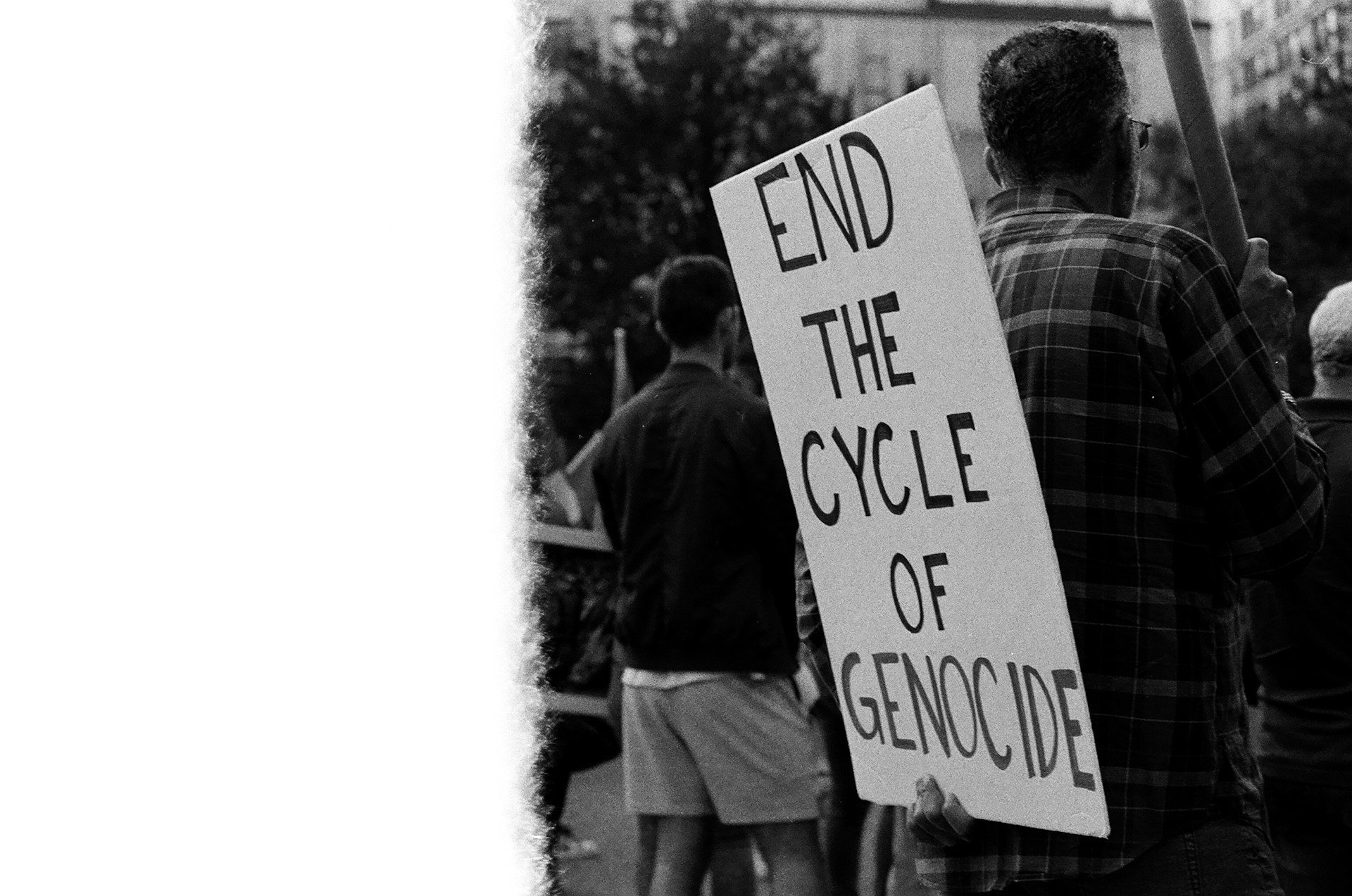
Genocide Awareness Month reminds me of the need for forgiveness. It reminds me that to resist evil, we need to forgive those who have wronged us. This is only possible through the Holy Spirit. The Holy Spirit is the one who forms the church into a forgiving people. In doing so, we become a nonviolent people who can exist in a violent world.
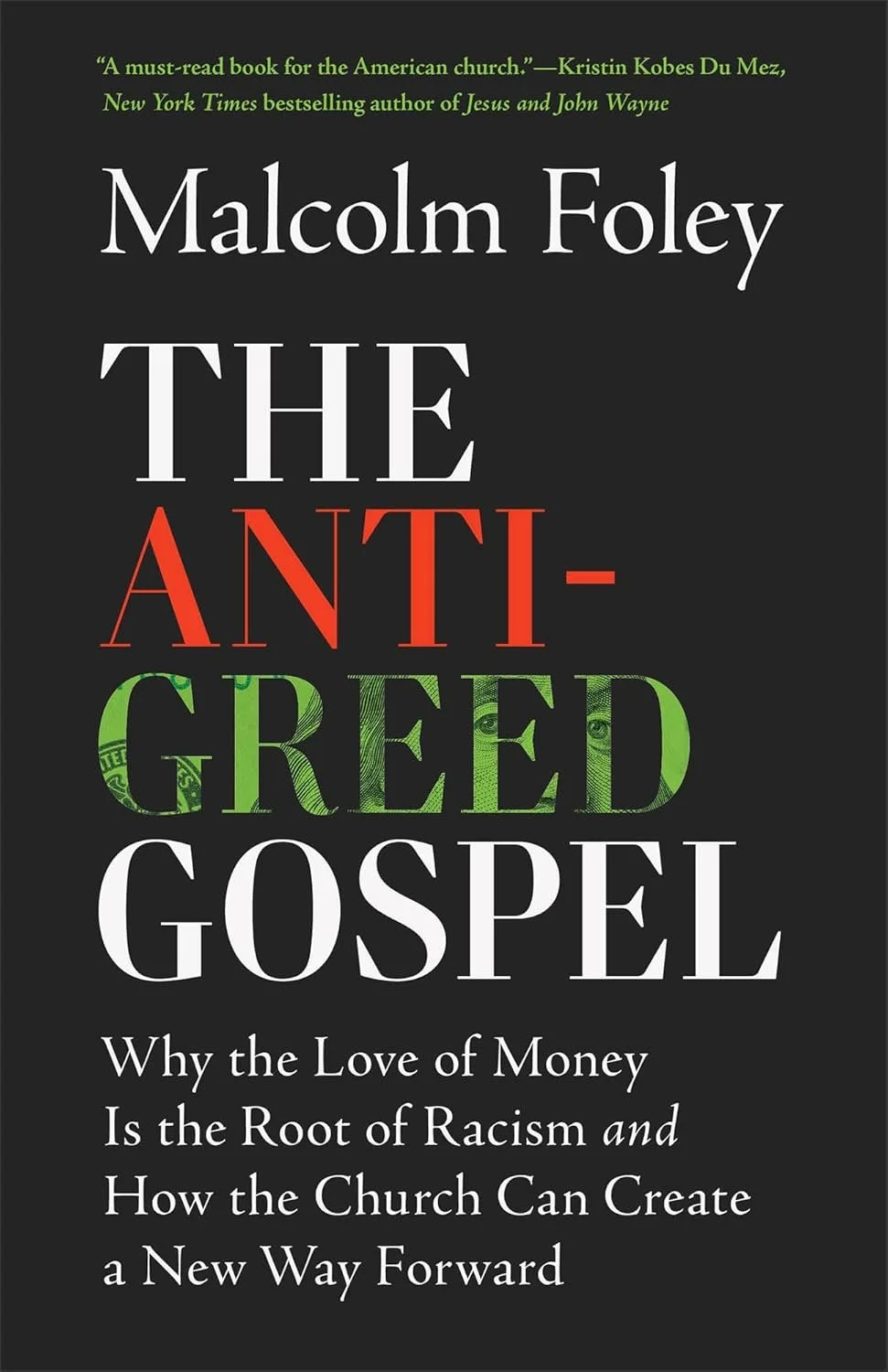
Foley’s book The Anti-Greed Gospel is an excellent introduction to racial capitalism as a constructive way to think about and combat racism. The constructive responses Foley outlines in this book are radical, but the gospel of Jesus Christ is radical.

There is a reason that Jesus instructs his followers, “Truly I tell you, unless you change and become like little children, you will never enter the kingdom of heaven” (Matthew 18:3). Once we become adults, our ability to embrace change and to open ourselves to new ways of thinking and living diminishes. But children have an inherent openness and malleability; with the exposure to the right kind of books, a child can be formed in ways that will last into adulthood.

As those who follow Christ, we believe in a God who provided daily bread in the wilderness (Exodus 16); a God who multiplied bread for thousands of people (Matthew 14:13-21), and a God who ultimately became bread to satisfy our deepest hunger (John 6:22-59). We can imagine it grieves God that anyone should be hungry; it should lead us to lament too. How do we wrestle with the weight of these realities and love our neighbors as ourselves (Matthew 22:34-40)?

I’ve learned that change rarely comes through arguments. My parents aren’t moved by stats. But stories, especially ones that echo their own, sometimes open something up. When I connect their immigrant struggles to those of others today, it sometimes softens them. Not always. But sometimes. What helps most is grounding our conversations in the life of Jesus—his humility, compassion, and refusal to chase power. When we remove Trump from the picture and just look at Jesus, the contrast is jarring. In the best way.

Migration and immigration are among the key issues of our political moment. Immigration is a complex issue with more factors than are often considered in short sound bytes, but a clear call in the Scriptures is to care for the “sojourner in our midst.”

A uniform approach to healthy family boundaries may not apply in our multicultural society, especially in families shaped by the immigrant experience.

The model minority myth erases both the suffering of Black Americans and Asian Americans.

Living as a member of a marginalized community can be lonely and a source of grief, but Verma reminds us that we can find Jesus in the margins.
When Asian Americans show up and take their seat at the table, they can influence and enact policies that promote justice and equity for their community.

A flourishing church does not mean a church devoid of problems and issues. It does not mean there will be no suffering in unknown times. However, a church that flourishes will require a different kind of sacrifice. Flourishing requires the participation of both men and women. It requires the young and old

The most important thing non-females can do in a ministry setting is to empower and acknowledge the talents they see in their congregation, and this can be done through language

Affirmative has never been a perfect tool to level the playing field of educational diversity. But it has made an important impact for thousands such as myself who otherwise were overlooked and not given a fair chance.

Over the years, trying to emulate my peers and my social justice heroes—Martin Luther King, Mother Teresa, Óscar Romero, and others—led me to burnout again and again. Each episode of burnout was worse than the last, until I found myself in bed, debilitatingly depressed, unable to work and barely able to function, for almost a year. I finally began to understand that I was following the way of other people more than the way of the cross.
Faith & Theology
We've inherited a vision of work that prizes achievement, esteem, and productivity above all else. But Scripture tells us something different. Work is about worship, service, and faithfulness. And the gap between those two visions is exactly what the Parable of the Talents in Matthew 25:14–30 invites us to reckon with.
Asian American biblical interpretation is committed to reading with, for, and about those who have been minoritized due to their Asian identity, while also offering them critique. It proposes a way forward toward greater justice and equality for Asian Americans.
Over the years, I’ve greatly benefited from the friendships I’ve made within AACC, especially as I’ve found other Asian American Christians pursuing a multi-faceted holistic discipleship—holism with the biblical view of the kingdom of God, and holism in integrating our Asian American identities with our faith.

Just as Jesus came as a baby approximately 2025 years ago to fulfill the hope of deliverance and reconciliation with God, there is a promise of a second coming of deliverance where all things will be once again made new. We must remember that this story of waiting is not a story of passive resignation or hardened indifference, or a fatalistic belief that nothing will change the trajectory of this cruel world’s demise. The story of redemption is not one of instant resolution, but of patient faith. And just because we cannot see what is to come does not mean we do not wait in anticipation and long-suffering for the story yet to be unraveled.

As Christians, we have the opportunity to experience God’s heart when we practice hospitality. In many ways, with its communal focus, rich food culture, and natural bent toward honoring guests, Asian culture uniquely positions us to share this kind of welcome with others. We have the opportunity to create spaces where people can enjoy a meal and a meaningful conversation. Where they can wrestle with a difficult thought, share their anxieties, or sit silent in grief. Where they can linger without an end time.

Here’s what we have learned. You do not drift into becoming a Jesus-centered church. You have to build it. We began asking, “How do we form a church where Jesus is truly central?” We found the answer in two things: discipleship and prayer.

We all have losses that have shaped us, from losing something we loved to lacking something (or someone) we needed. Only by taking the time to witness, name, and hold our Grief, can we find the strength to release it to grow into something more.

To become the church as it is called to be, the Asian American church should also engage in a historical reckoning of its own complicitous legacies, such as authoritarian and neoliberal complicity.
So then, can I, as an Asian American, trust Scripture? According to the wonderful contributors of The New Testament in Color, the answer to that question is “Yes!” Yet, not only I as an Asian American can trust Scripture, so too can African Americans, Hispanic Americans, Native Americans, and others.

We celebrate this Advent, the birth of your son Jesus, and we also look forward to the 2nd Advent, the day when you will come again to make all things right, and to complete your Kingdom. Until then we ask for the strength of your Holy Spirit to help us to keep your commands, to live in truth, to do justice, to love kindness, and to walk humbly with you.

All of us are invited, even called, by God to make Jesus our hope. None of us are more worthy or less worthy to encounter God today. There’s no chart with God that puts some of us closer and some of us farther away. We’re all on the same ground. So, whoever you are, wherever you’ve been, welcome. God’s Spirit is here. Let’s meet him.

Today is the second Sunday of the Christian season of Advent. Advent means “coming” or “arrival.” We celebrate two advents of Christ during this season – and, really, every day.
Our Stories
Alongside “Have you eaten yet?”, “Let’s eat!”—or in my Cantonese household, “sik fan la!”—is a mealtime call shouted loud and clear throughout the house, reaching all the hungry stomachs and drawing them near. …As I read Jesus’s words, “Come and have breakfast” (John 21:12, NIV), I can’t help but recognize Jesus’s anticipation of the disciples’ needs and his preparation of a simple, yet thoughtful meal made with love.
Genocide Awareness Month reminds me of the need for forgiveness. It reminds me that to resist evil, we need to forgive those who have wronged us. This is only possible through the Holy Spirit. The Holy Spirit is the one who forms the church into a forgiving people. In doing so, we become a nonviolent people who can exist in a violent world.

So, I began to wrestle.
How do I honor the Lord
and also honor my parents?
How do I repay their sacrifices
while also honoring the sacrifice my Savior made for me?
“You’ll bring honor to us all.”
“Honor your father and mother.”

Father's PNEUMA is a very personal project for me. It was my attempt to reflect and process the devastating effects of Pulmonary Fibrosis - a debilitating lung disease that is taking my father's life. Through this piece, I explore the heart-wrenching journey of watching a loved one's gradual loss of breath and the overwhelming helplessness of such a condition.

How does one live faithfully to Jesus when you cannot stand your parents and do not know how to turn the ship around? We all come from varying degrees of conflict in our families of origin. It is my hope that my story can show a potential way forward and most importantly give Asian Americans permission to wrestle with the hardships of family relationships without shame.

In traditional Asian culture, and certainly in the Indian culture that I grew up in, honor is relational, communal, and duty-based. Our vocations, careers, lifestyles, and decisions in life may be scrutinized through an honor-based lens. While the Western society that many of us grow up in places great importance on self-expression and chosen respect, Asian honor translates to sacrifice, family reputation, loyalty, and obedience.
Our cultural heritage matters to God. Within our cultural heritage there are things we can learn about God. As Asian Christians we’re rarely told this. Perhaps we’re more often told that God wants us to set aside parts of our cultural heritage in the name of following Jesus.

But after this time of immobility, I've slowly come to realize that what I've received from my mother—my inheritance—is much greater than any sum of money: My very flesh, my whole life, was a gift from her.

This was the mentality that my parents instilled in me when I was growing up. Grounded in cultural (i.e., Korean) and biblical principles, a part of this mindset was for my sister and me to be kind to one another as siblings. But make no mistake about it: in my family, the “family comes first” mentality disproportionately emphasized the need to honor our parents.
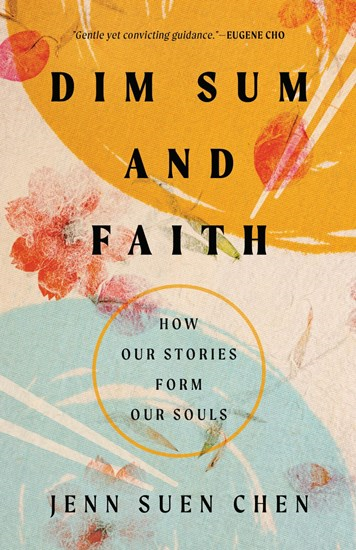
As we learn how to tell our story with God, our voice becomes our superpower and points people to Jesus. It’s not just about knowing our story; it’s about telling it with the voice we have been given.
One of my favorite stories is Akira Toriyama’s manga/anime Dragon Ball. Loosely inspired by the novel Journey to the West, Dragon Ball follows a young boy named Son Goku, who enjoys martial arts which helps him to fight strong opponents and push his limits. While Dragon Ball never explicitly states its Asian setting, Toriyama prominently features Asian food, martial arts, and characters with dark hair and eyes. These examples may sound simple, but my younger self, who grew up on white superheroes like Superman, instantly felt a deeper connection to Goku as I experienced Asian representation for the first time.
do not forget
the ropes
suffocating the necks of
the Chinese
who sing the song of ages:
we can’t breathe.
Past Series
Jesus’ life reflects the minjung (민중) of human history, life born in and concluding in unjust suffering. Incarnate Jesus resembles the deepest suffering of the immigrant experience within the diaspora of Asian Americans and beyond.
When I first read about Jacob and his uncle Laban in Genesis, I did not see Laban as anything but a villain. But now, years later, as I reflect on my South Asian culture and the culture of Jacob’s time, I find that I have questions about who Laban is.
I have carried these two perspectives, those of my tito and my classmates, with me for many years, trying to discern the right way to respond. The painful reality has been that biblical passages such as Rom. 13:1–7 have been used to justify the horrors of colonialism; by right of conquest, the imperial powers were granted the divine right to rule.
Asian Americans who are not fully bilingual understand Moses’s dilemma and can identify with his situation. As they are unable to speak fluently in the language of their homeland, they end up stammering and stuttering when they try. They speak hesitantly as they translate from one language to the other in their heads, and when words eventually emerge, they are tainted by an accent. On occasion, native speakers make fun of their feeble attempts, thus shaming and further discouraging them, causing them to shut down.
Alongside “Have you eaten yet?”, “Let’s eat!”—or in my Cantonese household, “sik fan la!”—is a mealtime call shouted loud and clear throughout the house, reaching all the hungry stomachs and drawing them near. …As I read Jesus’s words, “Come and have breakfast” (John 21:12, NIV), I can’t help but recognize Jesus’s anticipation of the disciples’ needs and his preparation of a simple, yet thoughtful meal made with love.
Asian American biblical interpretation is committed to reading with, for, and about those who have been minoritized due to their Asian identity, while also offering them critique. It proposes a way forward toward greater justice and equality for Asian Americans.


Was John Chau’s life lived in obedience to God and the spread of the Gospel or was it, as his pastor feared, pursuing “a fantasy"?

Yet the beauty of it is learning that all of those pieces, even the painful ones, fit perfectly together to create the masterpiece that is me. Stories, pain, conflict, joy, resilience, creativity, courage, and even anger have all brushed their unique strokes and colors onto the canvas of my life and invite me into an opportunity to become whole as I welcome all of the pieces of myself.

Here we have a story; that doesn’t live happily ever; after but goes on, nevertheless. We don’t know exactly; what happened to grandma, only; she is with them like voices in leaves.

Films that disempower East Asian women tend to fall short because the house of cards was built upon a shaky foundation.

In this article, we interview Tina Cho about her work as a children’s author and the value of diverse representation in children’s literature, which characterizes much of her work.
Best of the archives

Anti-Asian attacks have been skyrocketing at an alarming rate since the start of the pandemic. Yet there has been a gaping void of evangelical voices publicly speaking up to defend their Asian American brothers and sisters.

I had dreams of teaching in women’s ministry. Then I was rebuked for teaching about justice.
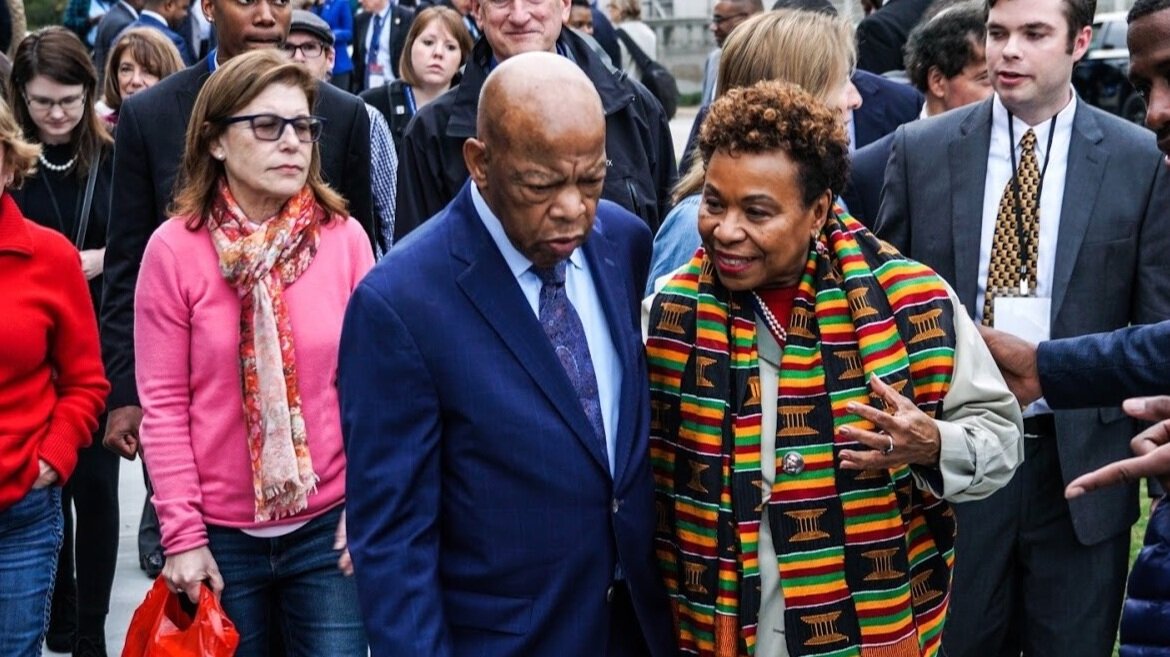
I was taught that getting into trouble was always a bad thing. Rep. John Lewis showed me otherwise.