The AACC Conference and Reflections on Unity
By Fiel Sahir
Editor’s Note: This is a reflection from the author’s time at the inaugural AACC conference held last October in Washington D.C., written in collaboration with Fuller’s Asian American Christian History Institute (AACHI). As we prepare to gather for our second conference this September 28–30 in Los Angeles, CA, we hope this reflection will encourage you to consider joining us in this important task of gathering in unity as Asian American Christians. This year’s conference, “Awakening,” will focus us on reclaiming a formation journey that is fully Christian and fully Asian American. For more information or to register, head to the AACC Conference 2026 page.
A powerful prayer resounded: “Lord! Would you raise up and bless my AAPI sisters and brothers. We need them. They are a benefit to us in the church! Without them we are malnourished!”
As someone who has traveled the world and was born to a historically mixed Indonesian American family, this was a stunning prayer. It was the first time in memory I had heard someone who was not Asian American pray for and bless the Asian American church with such fervor.Something is happening in the Asian American Church. What do I mean?
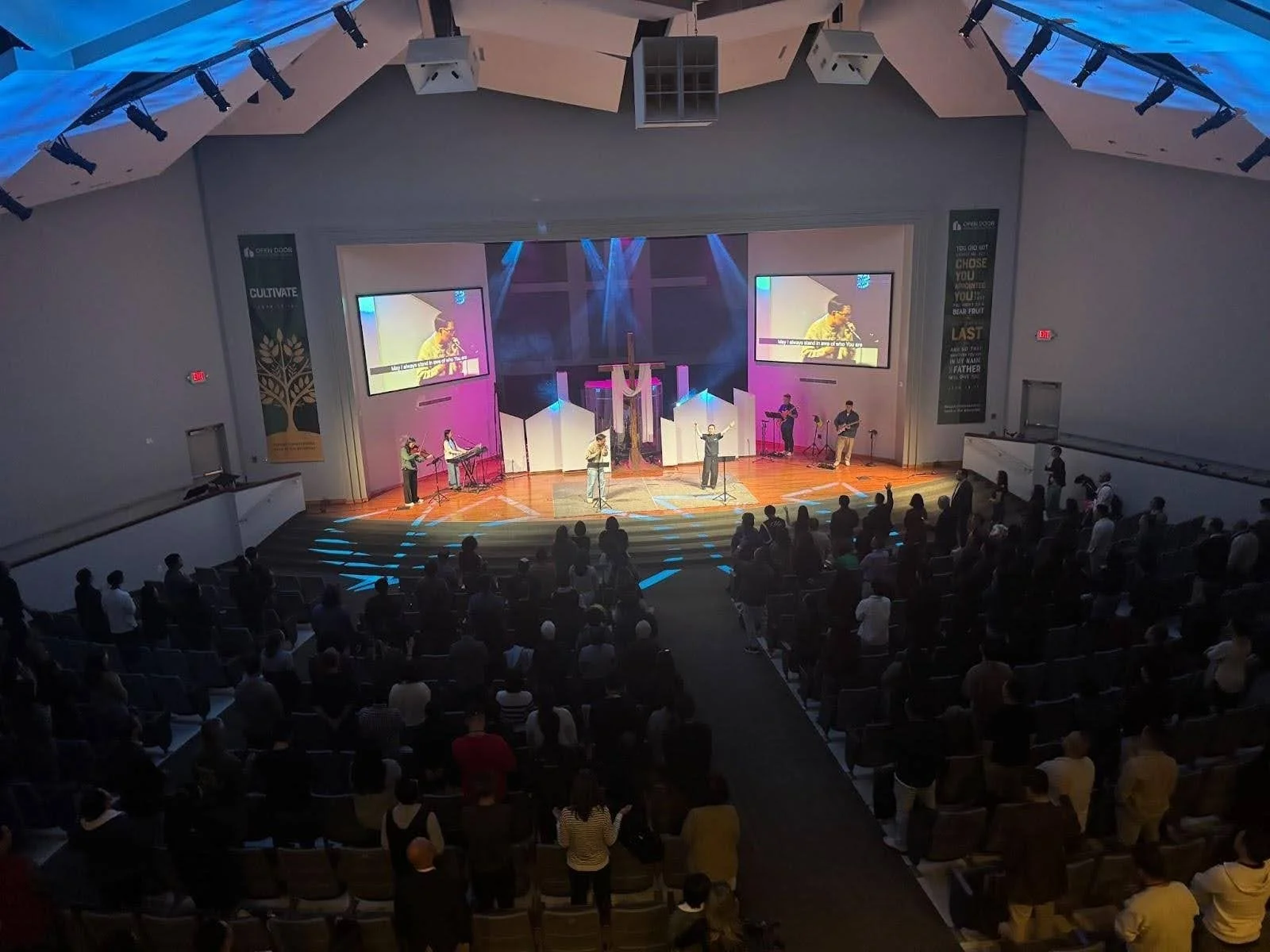
In October 2025, hundreds of people from all over North America gathered for three days in Washington D.C. at the first ever national conference hosted by the Asian American Christian Collaborative (AACC) at Open Door Presbyterian Church.Attendees came from 24 states spanning West Virginia to Oregon to Wisconsin, as well as from our northern neighbor Canada. Even more diverse was the ethnic background of those in attendance, representative of the diversity of Asian Americans (Filipinos, Chinese, Japanese, Koreans, Vietnamese, Hmong, Indians, Pakistanis, Burmese, Indonesians, Mixed Race, and even African Americans, Whites, Third Culture Kids, and transracial adoptees).
There was also a plethora of different church traditions as well: Non-denominational, PCA, Evangelical Covenant, Vineyard, Southern Baptist, RCA, UMC, American Baptist, Assemblies of God, Christian & Missionary Alliance, PCUSA, Episcopal, and Mar Thoma.What a list! There may have even been others represented.
Importance of Knowing Our History
Whenever Asian Americans come together, we join a “great cloud of witnesses” who came before us (Hebrews 12:1, NIV).
Thirty-eight years ago, a Chinese American pastor named Louis Lee had a heart for those of Asian descent in the church. He started the Ministry for English-Speaking Asians (MESA) in 1988. As part of their work they set out to create a directory of English-speaking Asian churches, ministries, and leaders.MESA organized many national conferences for Asian American Christian (usually evangelical) church leaders and pastors. It also held men’s, women’s, and even marriage conferences! Dr. Timothy Tseng writes in his forthcoming book on the history of Chinese American Protestantism, that the two most significant events that MESA organized were “the national Asian American Leadership Conferences (AALC) in Southern California in 2004 and 2008. About 400 church leaders from all over the nation - representing many Asian ethnicities, denominations, generations, church and parachurch ministries, and evangelical theological perspectives - gathered for these three-day, two-night events.” (You can learn more about MESA through Pearl Dive from the Asian American Christian History Institute (AACHI).)
MESA was not alone. It reflected an era when Asian American Christian leaders actively worked to build biblical unity. Other organizations such as FACE (Fellowship of American Chinese Evangelicals) and PaLM (Pastor and Laity Ministries) in the NY metro area predated MESA. While FACE focused on Chinese churches, PaLM eventually became pan-ethnic under the leadership of Pastor Howard Chan. Both sought to support, equip, and build unity among English-speaking Asian American Christians.
Another organization, called the L2 Foundation, was started by entrepreneur Paul Chou and his wife Alice, and headed by DJ Chuang. They gathered Asian American Christian leaders through leadership summits, starting with an event called “The Gathering” in 2000. L2 Foundation’s leadership summits inspired Ken Kong and other South East Asians to create the South East Asian Catalyst (SEAC). This was a conference that lifted up the voices of Southeast Asian Christians and pushed back against East Asian dominance traditionally seen in AAPI Christian circles—an effort which AACC has also endeavored in.
Today, it is difficult to gather Asian Americans of diverse nationalities and denominational traditions in the same room. AACC’s grand effort builds on a heritage of believers who embodied a vision for Asian American Christian unity.
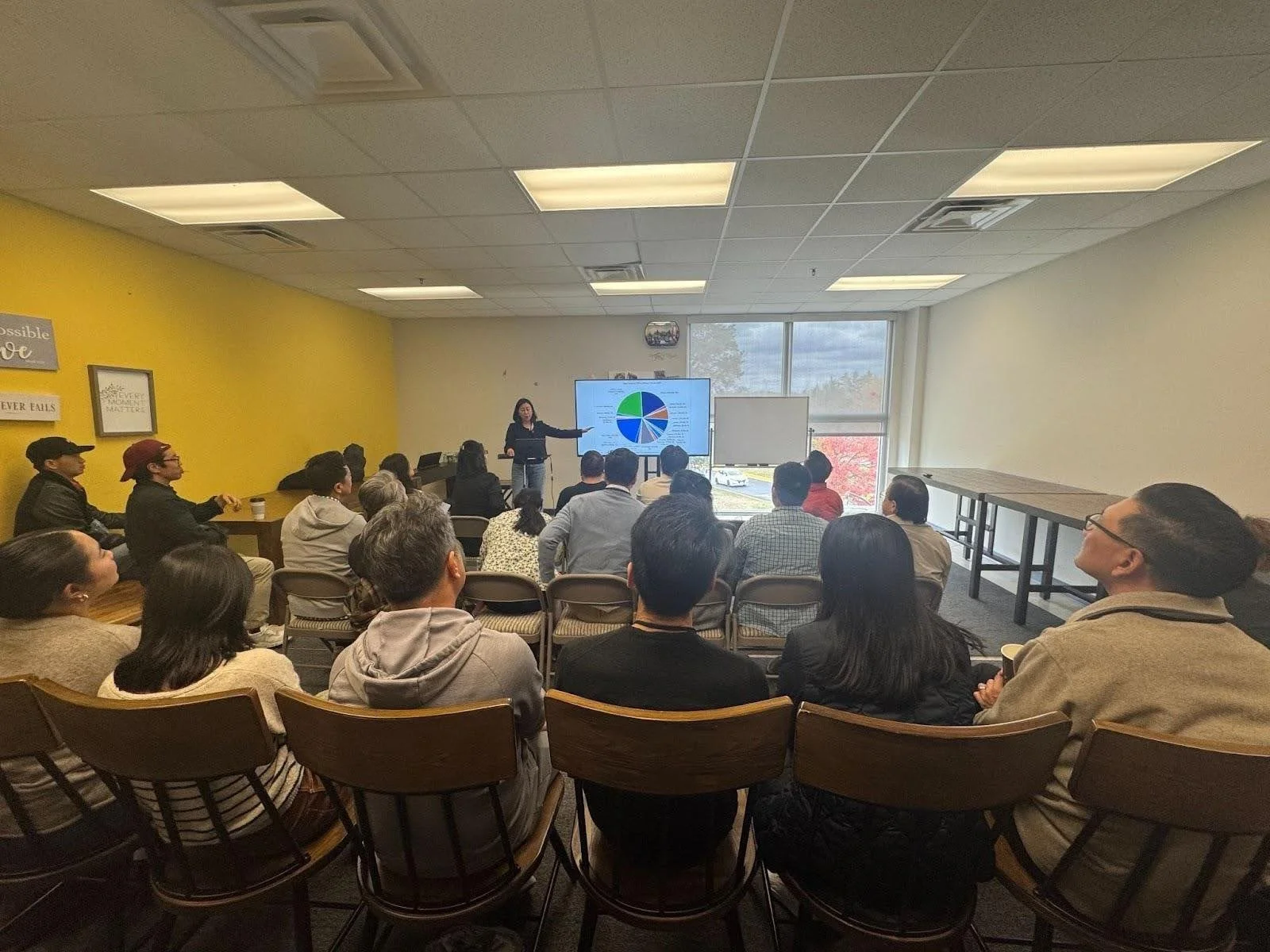
Throughout the AACC conference—whether in New Testament professor Janette Ok’s standing room breakout session or in the various panel discussions—it was made very clear that Asian American history is foundational to how we understand ourselves in this country.
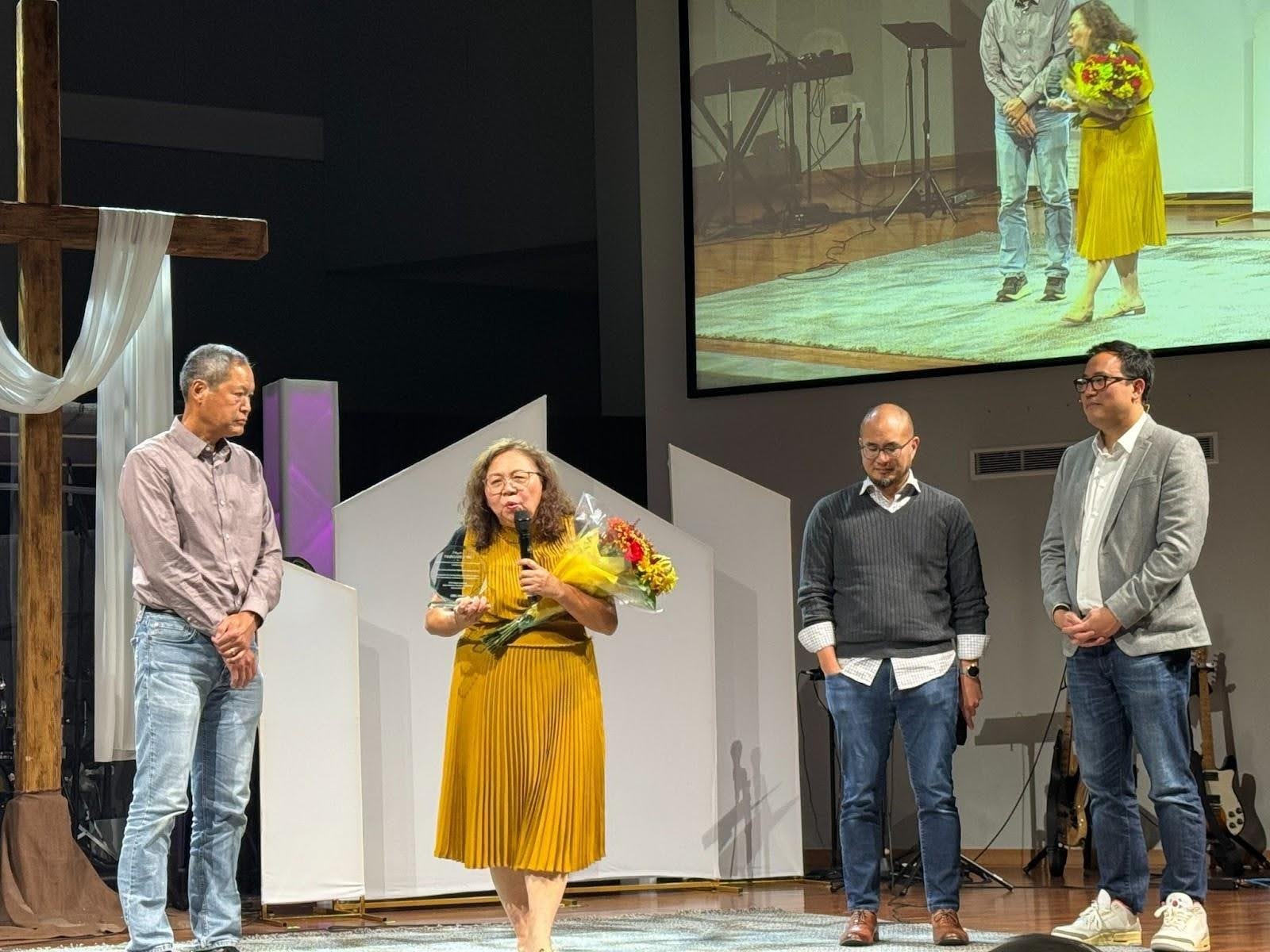
Margaret Yu giving a few words of encouragement to AACC
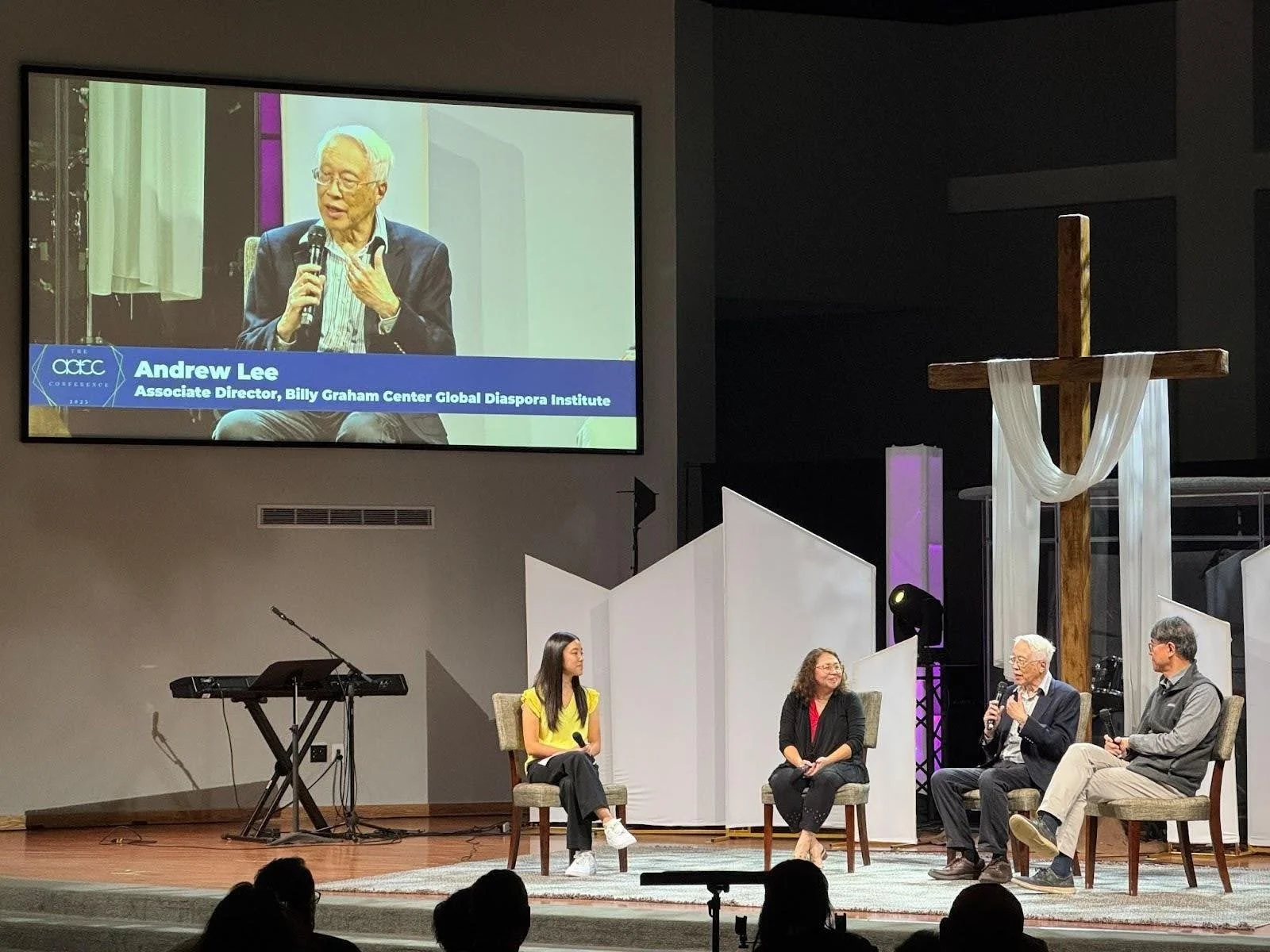
At the AACC conference, this truth was made tangible by honoring three Asian Americans that gave their lives in service to the church. Margaret Yu of Epic Movement, Rev. Dr. Andrew Lee of Wheaton College’s Billy Graham Center, and Rev. Dr. Peter Cha of Trinity Evangelical Divinity School.
During her acceptance speech Margaret Yu exclaimed, “Why is history important? Because it tells me who I belong to.”
Without knowing who we were and are, it is difficult to move forward. To me it seemed like the past was helping us build a vision for tomorrow! We were in a place where we refused to passively allow a colorblind church and society to choose our story. Rather, this was our time to take our stand and make our stories.
Unlike a hyper-individualistic American evangelicalism characterized by sharp doctrinal lines, I believe that almost all of us from Asian and Pacific backgrounds value gathering across our differences. It is part of who we are. One of the things our collective cultures do very well is creating and building connections. We spend time together. Not just a few short moments, but hours—even days—of our lives.
Can we extend this sense of connection to those outside of our church traditions? Are there other Christians—such as Roman Catholics or Eastern Orthodox believers—that would feel welcome in our circles? How do we feel about their presence among us? Is their theology enough to stop us from having any meaningful connections? Or can we value the theology of being the body of Christ and of being ecumenical? History tells us that gathering is an important part of the Christian story. From the Councils of Nicea and Chalcedon, revivals and awakenings, and the Lausanne Conference, bearing witness to Jesus Christ through unity has been a way of being faithful to Christ’s words:
A new command I give you: Love one another. As I have loved you, so you must love one another. By this everyone will know that you are my disciples, if you love one another (John 13:34–35).
My prayer is not for them alone. I pray also for those who will believe in me through their message, that all of them may be one, Father, just as you are in me and I am in you. May they also be in us so that the world may believe that you have sent me. I have given them the glory that you gave me, that they may be one as we are one—I in them and you in me—so that they may be brought to complete unity. Then the world will know that you sent me and have loved them even as you have loved me (John 17:20–23).
Is holding conferences and gatherings such as last October’s a way of being faithful to who God is calling us to be and of honoring those who came before? Is it a way to demonstrate that our love for one another is what the world yearns for? It is hard to love or express unity from a distance. What I know is true is that if we are willing to gather and connect in the name of Jesus, we are greater than the sum of our parts.
Let’s keep gathering (Hebrews 10:25). Let us continue living out who we were made to be! Let us persist in our joining the “great cloud of witnesses”
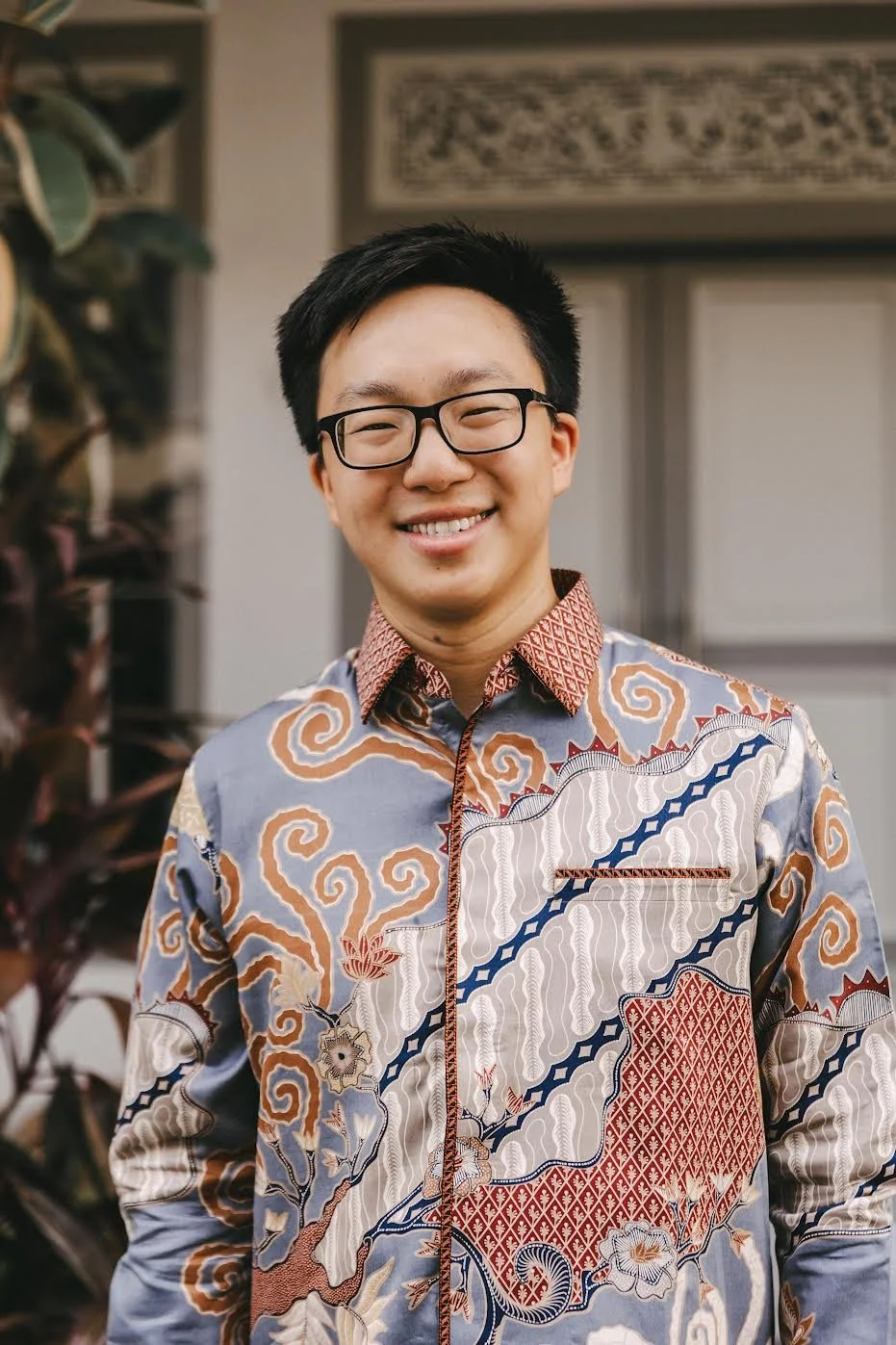
Fiel Sahir, LMSW works at the Asian American Christian History Institute (AACHI) housed at Fuller Seminary where he is the Community Resourcing Catalyst. He is an Indonesian American licensed social worker of historically multiethnic heritage hailing from New York City where he lives with his wife, a Dominican Nicaraguan American and fellow New Yorker. A multifaceted soul, he holds advanced degrees in Classical Music, Biblical Studies, and Social Work. He is one of the hosts for the Pearl Dive Podcast from AACHI. Sought after as a speaker and preacher, he has spoken in various settings and churches throughout the world.
Since the pandemic he has taken a deep dive into his roots and become the amateur family historian and genealogist of multiple family lines through which he is descended. He is the author of Kristanto: A Peranakan Family History. Fiel is of Javanese, Hakka, Cina Benteng, Peranakan Hokkien and miscellaneous Austronesian descent. He also speaks multiple languages including Indonesian, French, Spanish, and German.
More Like this:

Help us continue the work of empowering voices. Give today.