
Discovering the Ancestors, Discovering God’s Family
By Wendy Quay Honeycutt
O
ur cultural heritage matters to God. Within our cultural heritage there are things we can learn about God.
As Asian Christians we’re rarely told this. Perhaps we’re more often told that God wants us to set aside parts of our cultural heritage in the name of following Jesus. I have been a Christian since I was twelve. Over five years of formal study I was taught the importance of understanding the context and culture around me so that I could better connect the Gospel with the people whom I serve. But it wasn’t until 2020, when I took a sabbatical year to study at the Akrofi-Christaller Institute for Theology, Mission and Culture in Ghana (ACI) that I discovered how we might flip the script. It was my Ghanaian brothers and sisters who, for the first time in my life, invited me to delve into my Chinese Malaysian heritage in order to see what it could teach me about God. I researched Asian ancestral veneration practices, digging behind the presenting rituals to seek out the questions behind them, and then “reading” them through the lens of Scripture. Through this process, I discovered what made my parents tick, and the Father heart of God who is building his family through the perfect obedience of his Son, Jesus.
The Process: Going Deeper into Culture as Theological Method
My guide on this journey was the late Ghanaian theologian Kwame Bediako. Most non-Western Christians have experienced and received Christianity, at least to some degree, as “dressed in Western clothes”. In response to this reality, Bediako drew on scriptures such as Revelation 1:8 and Colossians 1:16–17 to argue that Christ is in the cultural heritage of all peoples and of every culture. Every culture, he said, has strands within it that run towards Christ, and strands that run away from him. Thus we as Christians can plumb the depths of our cultures for Christ’s footprints, and for our responses to him. We can ask of our cultures, “What does Christ affirm about this part of my culture?” “Is there anything that he really does want us to stop?” And my favorite question of all, “How does Christ fulfil the aspirations of my culture, and in so doing, transform it?”
The Ancestors
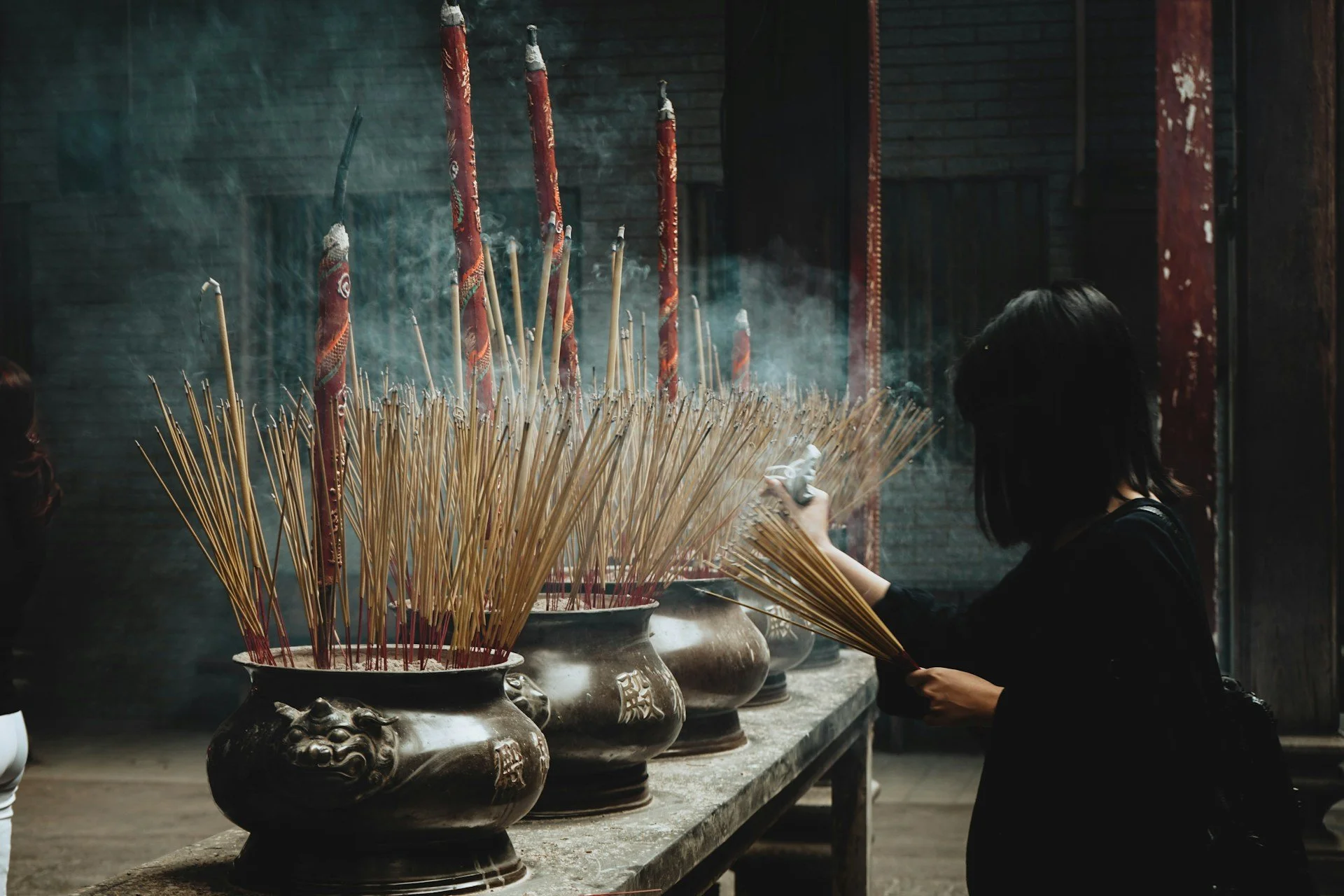
Acknowledging and venerating ancestors is a major part of Asian life and cultures. Here I am using the term “Asian” to refer to Confucian based cultures in East Asia or the diaspora. My family left Malaysia for Australia when I was six. I don’t remember talking with them about ancestral rites. I do, however, remember my paternal grandfather’s funeral. I was probably three, and I remember my cousins teaching me how to fold paper money that we burned for him. I also remember a table in his house with his picture; and every time we visited my grandmother, we were instructed to wave lit incense sticks in front of his photo. They’re vague memories, but they’re there.
On my father’s side, all but one of my aunts and uncles are Christians now, and so they don’t practice these rites. But in my World Christianity class during sabbatical, my lecturer told us that many Korean Christians had worked out a Christianized rite to remember their ancestors. My response took me by complete surprise. I felt … jealous! I found myself saying, “Oh, I’m happy for them.” Because I knew that for me, this wasn’t allowed. Intrigued, I found myself searching for Christ’s footsteps within Asian ancestral veneration practices.
The Great Family Continuum: Getting To Know Mum and Dad Better
Asian ancestral veneration practices are rooted in the notion of filial piety—the love and respect for one’s parents and ancestors. I knew of filial piety, but its absolute significance within my culture only dawned on me when I learned that it is the prime virtue on which all Chinese society is built. Filial piety governs the entire kinship structure of Chinese families. Fathers must provide for their sons, ensure they are educated in the traditions, and that they are married well. Sons owe their fathers complete obedience, even over and above obedience to the state. They have a duty to support their parents into their old age, and then to mourn and bury them and provide for their needs in the next world. Finally, they must ensure the preservation of the male line, partly to ensure the continuance of this veneration. Chinese societies are built on this notion of “the great family continuum” of numerous ancestors watching over innumerable descendants (H. K. Yeung, J. Nkansah-Obrempong and S. Chan, ‘Ancestors’, Global Dictionary of Theology) .
Even before I explored any theology, I was struck by what my parents were raised to expect from me as their eldest daughter, and how clueless I was of those expectations. I realized that I had grown up in a Western culture of words, individualism, and independence; while they were operating out of a Chinese culture of the unspoken and the enacted. And far from enacting the filial piety of an eldest daughter, I had acted out my pubescent rage, and then my westernized vision of self-determination.
Absolute obedience is not a particularly Western value, nor is the notion that my prime duty in life is to play my part within an on-going legacy of the generations through time. Even the idea of caring for one’s parents into their old age is more a hope in the West, than an expectation. My research laid bare for me the huge gaps in my understanding of my parents’ expectations of us as their children, gaps that were no doubt opened up through our migration to the West. Separated from the unspoken cultural pressures of Malaysian society, things that might have otherwise been obvious never quite filtered down into my psyche.
Jesus, the Alpha and Omega of Filial Piety
With my newly opened eyes, I suddenly saw that Jesus is the perfect eldest son who deeply understood filial piety. In the letter to the Hebrews, Jesus is portrayed as God’s firstborn Son and self-expression. In full obedience to the Father, he takes on human flesh and blood, dies, and breaks the power of the devil and of death over us in order to be able to call us his brothers and sisters without shame (Heb 1 and 2:10–12). What an expression of filial piety! Further, as an earthly son, he dared to challenge the Pharisees on their hypocrisy towards their parents (Mark 7:10–13), and one of his last acts on the cross was to commit his mother into the care of the disciple John (John 19:26–27).
Yet, in the Gospels we also get the sense that while Jesus was affirming filial piety, he was also transforming it, lifting up our vision towards its fulfilment. Jesus never married; and he never had his own sons. In Asian culture, this would be quite a failure! But Jesus, in perfect obedience to the Father, was busy growing God’s family, a family that goes far beyond the bounds of Asian filial piety. In Asian culture, it would be inappropriate to venerate another family’s ancestors. But the family Jesus is calling together transcends biology to mean those who do the will of his Father in heaven (Matt 12:50, Heb 2:10–12). Viewing God through the lens of filial piety points us towards the multitude of obedient disciples from every nation, tribe, and tongue (Rev 7:9), whose ancestors are the “great cloud of witnesses” (Heb 12:1, NIV).
African theologians call Jesus their proto-ancestor, recognizing that he is the “[pre-existent] Word of God” and that his “‘ancestrality’ goes beyond all anthropological and cultural parameters” (Masumbuko Mununguri, The Closeness of the God of Our Ancestors). In the same way, viewing Jesus through Asian eyes, we can see Jesus, our progenitor; the Son before there were any other sons (Col 1:16). Surely, ancestral veneration is our culture’s resounding “Yes!” in response to this revelation.
Here lies one of the gifts and challenges that Asian cultures offer to the worldwide church. Filial piety is a window through which we see Jesus as the founder of God’s family. And through the concept of family, Jesus invites the worldwide church—indeed, pushes us—to behold a bigger vision.
That God is building his family transforms our understanding of salvation and of the church. We can no longer view salvation as an individual enterprise. Rather, it is to be welcomed into something vastly beyond ourselves. To be saved is to be incorporated into the great, historic, multi-ethnic continuum that is the family of God.
I shared this with one of the college students I work with, and in reply he said, “That’s a great image, but my family is the most dysfunctional group of people in my life!” Indeed, is this not also true of the church? We are a mess! But as my parents are so fond of saying, “Blood is thicker than water.” As I contemplate my family that is bound by the very blood of Christ, I’m challenged afresh to remember that we are stuck with each other, called together to somehow reflect to the world the glory and compassion that our Father has shown to us through the example of our eldest brother.
Surely, when we see each other as family, our views of each other must be transformed. Just as Paul called Philemon to see Onesimus no longer as his slave, but as his brother, the call of family demands that we step out from behind our walls of racism, elitism, and political division to see each other as siblings. Even further, the call of family is a call to make space for those among us whom we have oppressed (yes, we need to name this), or remain unseen, both within and outside of our Asian communities. Our Father calls each of us to different expressions of this mission of being family, and it is a call that invites us to bring our uniquely Asian perspectives on family to the table. For me, coming to better understand my heritage and my family has set me on a path towards engaging with theologies that elevate the voices of my global brothers and sisters who have so often been unheard. Where might such a journey take you?
Our Asian cultures are rooted in family. When we bring our perspectives to Scripture, we bless the whole worldwide church; and we honor our God, and I believe, our parents.
Photo by Chinh Le Duc on Unsplash
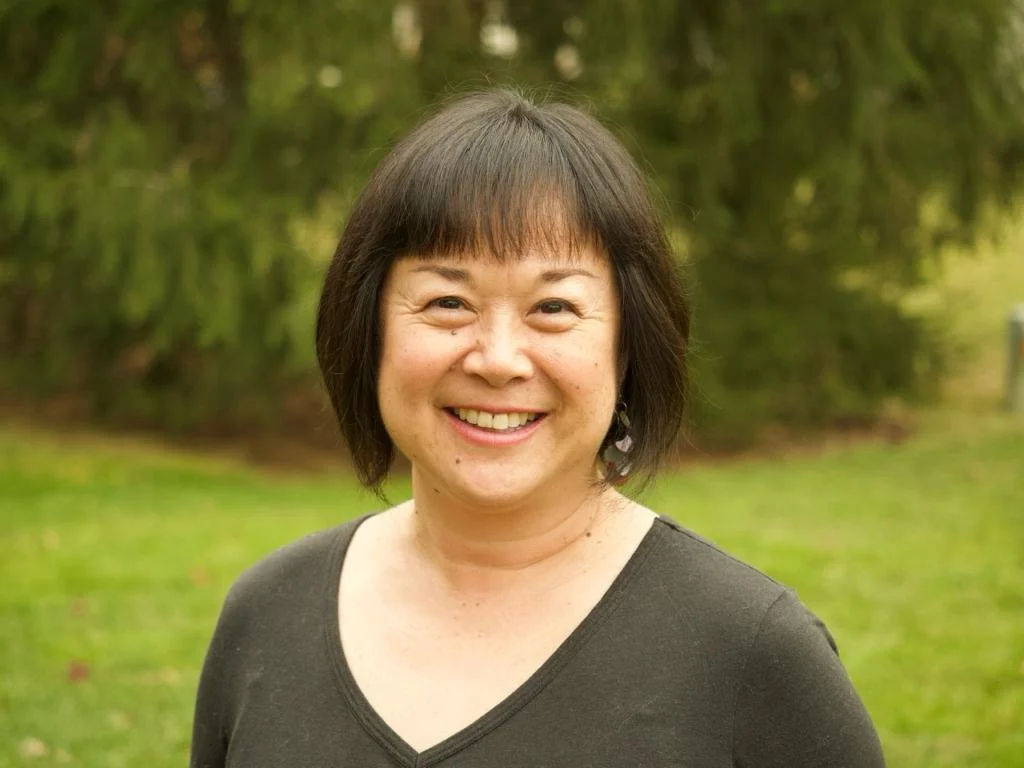
Wendy Quay Honeycutt serves as Vocational Discipleship Specialist with InterVarsity/USA's Pacific Region. Ethnically Chinese, she was born in Malaysia and grew up in Australia. After practicing law in Melbourne for several years, she moved to the UK where she studied theology at Oxford University, and then at the University of Aberdeen. During her sabbatical in 2020, she also completed an MA in Theology and Mission at the Akrofi-Christaller Institute of Theology, Mission and Culture in Ghana. She has always been interested in helping students and faculty articulate the connections between our Christian faith and all of life, and she loves coming alongside students to explore their questions about God. She is married to Jared who is an Immunologist, and together they love cooking meals for friends and getting outside with their little dog Oliver.
More Like this:
Help us continue the work of empowering voices. Give today.