
How to Explore Your Inner World While Honoring Your Parents
By Fiel Sahir

S
undays were once the worst day of my week. Church felt like nothing but a social obligation and exercise in looking the part. Sermons would drone on and on, and I would pass the time jotting down notes in a notebook. To others, it would seem like I was paying attention, but in reality I might’ve been busy critiquing the sermon points and correcting the grammar. Not a Jesus-like way to spend your Sunday, especially when the preacher is your own immigrant father.
How does one live faithfully to Jesus when you cannot stand your parents and do not know how to turn the ship around? We all come from varying degrees of conflict in our families of origin. It is my hope that my story can show a potential way forward and most importantly give Asian Americans permission to wrestle with the hardships of family relationships without shame.
When Exploring your Inner World Transforms Your Outer
Things had grown sour between my parents and me. For them, everything was fine and I was the one with issues. Over the years they were constantly busy with church affairs and didn’t understand me as a person. But for me, conflict was the defining characteristic of my relationship with them. It seemed like there was no way forward. In January 2020, I was at my wits end and my resentment had peaked. These feelings (though understandable) reduced my parents and their humanity only to the ways they had hurt or angered me.
Everything changed when one day an individual in my life told me over the phone: “You are insane and deluded.” My world completely crumbled after hearing those words and I spent the next two weeks trying to make sense of the gravity of these words. I decided it was time for a change and I found a therapist. She wasn’t just any therapist. She was a licensed clinical social worker, missionary kid, and had lived a global experience in multiple countries and cultures.
Because of her experience, she was able to help me analyze and understand the cultural norms and practices of my parents. She explained my own culture back to me. Just because I am of Asian descent that does not mean my perceptions are always correct. Therapy helped me understand in my native tongue of English the subtleties of what might have been happening underneath.
My parents may never change, but through this inner work, I expanded my heart and capacity to understand them better. I had to let Jesus in so I could see them with a new lens and honor them and their legacy in ways I never thought possible. In those hundreds of conversations, Christ met me there in indescribable ways.
The kicker: my therapist was white. I’ve seen people argue that it’s best to go with someone who is from your culture. I think it’s better to find someone who knows and understands your culture and how it works.
I started therapy in February of 2020 and by sheer luck my parents were in Indonesia. I had the house to myself, and having the space to breathe and reflect was pivotal. I also attended one of the Soul Care conferences led by Dr. Rob Reimer, a former professor at the now closed Alliance Theological Seminary. This experience reinforced what I was unpacking in my therapy sessions.
By March, the anger and distaste I had for my parents had subsided. In a bold move, I sat them at the dinner table and told them about everything that God had done and how he had touched my heart. In my recollection, their response was no more than an, “Oh. Well, that’s good.” In the past, I would have exploded and told them about the hours of work I had put in, but something was different in me. I was happy that I was able to share my inner world with my parents.
Sankofa: Going Back to See Forward
In the Akan culture of Ghana, there is a concept called Sankofa. An Akan friend of mine explained it this way: “Important lessons from the past can inform wise decisions in the present and the future.” How might this perspective inform our own lives?
During my honeymoon with my Dominican Nicaraguan American wife, we went to Portland, Oregon where I was born and half-raised. I thought I was just going to go on a nostalgic trip, but in reality I was revisiting my past as an adult with new lenses. Driving through the streets of Portland and visiting my schools and favorite childhood restaurants made me realize something: I was a happy kid here! It wasn’t until we moved to NYC that my life as a kid became rough.
My parents were mavericks when they first arrived in the United States. Despite my mom's family being against the fact that my dad was a musician, they married. In 1999, the unbelievable happened. My dad took over a local church because the pastor resigned three weeks after he began attending. He did it despite any seminary education! The congregation had eight old ladies in their eighties. My dad jokes that the “teenager” was 82 years old.
Sure he may have preached a sermon to these unsuspecting elderly ladies about the evil of Pokémon cards, but he had to pastor a church in which he was the minority. Then in 2000 the house we were renting caught on fire, forcing us to live at our church for two weeks. By the time we moved to NYC to pastor at another church, the church had grown to 40–50 people.
In the midst of it all, they were wrestling with their son (me) who developed an anxiety disorder called “selective mutism,” where I would only speak with people I felt safe around. It was through this trip that I realized how my current view of my parents was limited to a certain time period. They weren’t always like this, and at one point, saw the world differently. NYC and the church culture there had shaped them as they tried to navigate the rough waters of ministry together. Even though my parents weren't with me on the trip, revisiting my childhood helped me humanize my parents, acknowledging how my parents also changed and how their experiences and trauma had shaped them into who they are today.
God’s Miracles
One thing I appreciate about growing up in the ‘90s and experiencing the church of that era was the gift for storytelling, listening to how God impacts people’s lives on a regular basis. As we grow older, we accumulate stress, pain, anger, and disappointment. It can be easy to lose sight of the amazing things that have happened to, in, for, or through us. In fact, the negative parts of life can very quickly overwhelm and obscure any good things that have happened as we try to make sense of the world around us.
One way I combat that is through what the Hawaiians call “talk story”: sitting down and talking with our elders to hear their stories.
Over the past few years, I’ve been delving into my family history and genealogy in order to better understand why my family is the way it is. Our family dynamics are not by accident—God chose my parents, grandparents, and cousins for a purpose. Since doing this, I’ve been able to find family graves, meet with new family members, and trace back to three ancestral villages in China! I now see the world through centuries of God’s faithfulness rather than through my pain in the present. God shows himself as I discover who he made me to be.
When I was visiting my now-retired parents, I decided to ask them about the ways that God has moved in the life of our family to bring us to where we are today. Sure, they were caught off guard and weren’t sure where to start. But we hit record, and my parents began to share stories from throughout their lives.
For example, my mom has a quirk in her relationship with God. She rarely wants things for herself. But when she does, even when she thinks about it (before even praying), someone will show up at the house with the exact food item she wants to snack on. My dad jokingly said, “Me? I have to beg!!”
Hearing these stories helped me see how God speaks to us all differently, and that he loves his children deeply and uniquely.
What would happen if you sat with your family one weekend and asked them to “talk story”? What would it look like to give family members the space to share their story? A popular card game and tool to do this is “Parents are Human.” It was created by a fellow Asian American who also had come to a crossroads in his relationship with his parents. The card games have been translated into various Asian languages and even have the questions online for you to use for free.
As someone who works at the Asian American Christian History Institute, this is part of our heart for Asian Americans. Our stories matter.
God has something for all of us when we look into our personal stories, those of our parents, and especially those of our ancestors.
Photo by Simon Hurry on Unsplash
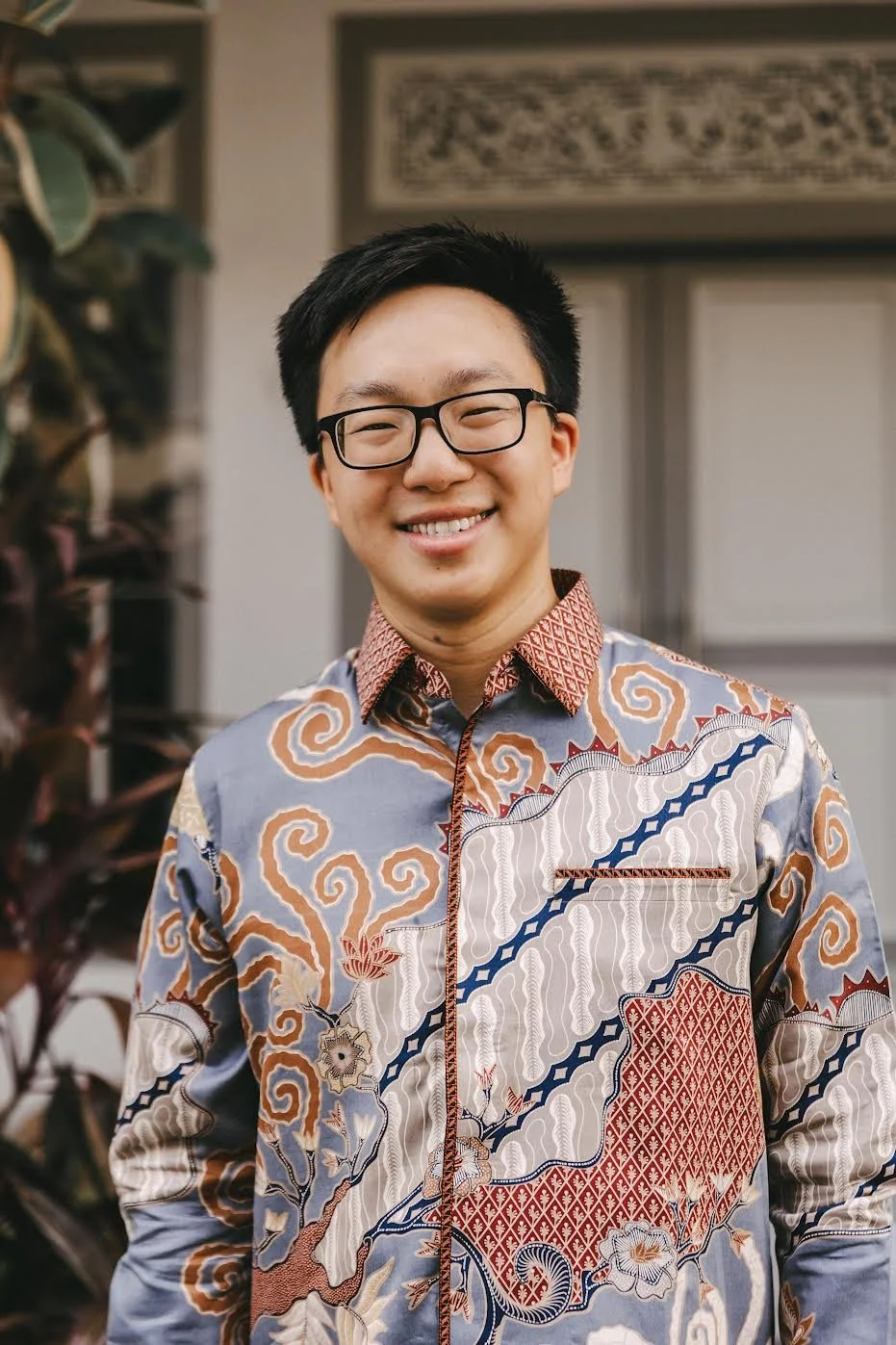
Fiel Sahir, LMSW works at the Asian American Christian History Institute (AACHI) housed at Fuller Seminary where he is the Community Resourcing Catalyst. He is an Indonesian American licensed social worker of historically multiethnic heritage hailing from New York City where he lives with his wife, a Dominican Nicaraguan American and fellow New Yorker. A multifaceted soul, he holds advanced degrees in Classical Music, Biblical Studies, and Social Work. He is one of the hosts for the Pearl Dive Podcast from AACHI. Sought after as a speaker and preacher, he has spoken in various settings and churches throughout the world.
Since the pandemic he has taken a deep dive into his roots and become the amateur family historian and genealogist of multiple family lines through which he is descended. He is the author of Kristanto: A Peranakan Family History. Fiel is of Javanese, Hakka, Cina Benteng, Peranakan Hokkien and miscellaneous Austronesian descent. He also speaks multiple languages including Indonesian, French, Spanish, and German.
More Like this:
Help us continue the work of empowering voices. Give today.