
The Parable of the Talents and Asian American Work Ethic
An Asian American Reading of Matthew 25:14–30
By Denise Lee Yohn

What Are You Working For?
There's a particular moment most Asian Americans know well. You're at a family gathering, and an auntie or uncle turns to you and asks: So, what do you do?
If the answer is doctor, engineer, or lawyer, you're fine. If it's something else—artist, nonprofit worker, entrepreneur—the conversation goes downhill fast. There's a pause. A look of confusion or disbelief even. Sometimes a pivot to ask about someone else's kid.
I've been in that moment more times than I can count. For a long time I found it merely bothersome, a quirk of immigrant culture. But as I've spent more years thinking and speaking about faith and work—including as a co-founder of the Bay Area Center for Faith, Work & Tech—the question has come to trouble me in a different way: it reveals how deeply most of us—especially Asian American Christians—have absorbed a particular set of assumptions about what work is for.
We've inherited a vision of work that prizes achievement, esteem, and productivity above all else. But Scripture tells us something different. Work is about worship, service, and faithfulness. And the gap between those two visions is exactly what the Parable of the Talents in Matthew 25:14–30 invites us to reckon with.
God Is the Giver of Work—and He Wants Us to Steward It
The parable opens with a man who, before leaving on a journey, entrusts his servants with portions of his wealth (Matt. 25:14). This establishes that work is something given, not earned. We don't generate our opportunities, capacities, or callings. They are entrusted to us by God, who is the original worker—and who commissions us to steward his creation (Gen 1:26-28).
Stewardship means we don't own what we've been given. We may not even be around to benefit from it. But we are called to tend it faithfully because it belongs to God and he has asked us to do so.
For Asian American Christians, this is often misunderstood. The immigrant work ethic many of us were raised in—the importance of sacrifice, the value of discipline, and the hard-won belief that effort produces a better life—is genuinely admirable. But as Pastor Albert Chu of Tapestry Church has noted, we must now pivot from working for security to working for service.
The ethic of the immigrant generation makes work the point—the source of stability, honor, and identity. The theology of stewardship says God is the point, and work is the means by which we serve him and his creation.
Different Assignments, Different Standards
The master distributes talents "to each according to his ability" (Matt. 25:15, ESV)—five to one servant, two to another, one to the last. This is not a flat, egalitarian distribution, which challenges a notion specific to many Asian American communities: the expectation that everyone should perform at the highest level regardless of giftedness.
Dorcas Cheng-Tozun has written about how many of us were raised "to be excellent at pretty much everything…be the best in every area of [our lives], or at least work [ourselves] into the ground trying to be." But the parable—and God—do not operate by that logic. There is no universal standard here.
Also note, the servants are not measured against each other. Each is measured against what they were given—this suggests faithfulness looks different for each of us. Many of us grew up in homes where comparison was the norm, even expected—comparison to other children, cousins, the neighbor's son who got into Stanford. But if we accept that God’s providential assignment to each of us is proportional to our own gifts, then we must resist the comparison trap.
We are also challenged to navigate the weight of others' expectations honestly. The aspirations of immigrant parents, the pressures of ethnic churches and communities, the collective dream that the second generation will justify the sacrifice of the first—these are not trivial. They often come from love.
But as Sarah Prem Manogarom has written, "Honor does not have to be tied down by tradition." We can genuinely honor our families' sacrifices—recognizing how they helped get us to where we are and reflecting them in the way we live grateful, generous lives for others— without being bound by expectations shaped by a different generational context.
Having said that, the hardest expectations to release are often our own. Many of us carry not only our parents' dreams but also our own drive to prove ourselves, our own hunger to earn respect and acceptance.
Ambition is not sinful in itself, but it needs to be surrendered—released from personal ego as well as the burden of being the vehicle for our family's dreams—and redirected toward the goals God cares about. Paul makes this clear in Colossians 3:23–24 (NIV): "Whatever you do, work at it with all your heart, as working for the Lord, not for human masters." Our audience, ultimately, is God—not our parents, not our community, not our own relentless inner critic.
Good and Faithful—Not (Necessarily) Successful
When the master returns and commends his servants, his words are telling: "Well done, good and faithful servant" (Matt 25:21, ESV; emphasis mine). Not successful. Not impressive.
Good is the word God uses to describe his creation in Genesis—it suggests morality, integrity, and beauty, not just utility. Karen Swallow Prior has observed that goodness is both an end and a means: not just a goal to reach, but a manner in which we travel toward it. Dorothy Sayers similarly argues in her classic essay, “Why Work?” that the value of work should not be judged by what it produces financially, but the care and craft the worker brings to it.
This cuts directly against Asian American achievement culture—and yet, the call to goodness is not a call to mediocrity; it is a call to excellence. The difference is primarily in our motivation. The question Scripture poses is not how much you accomplished, but why and for whom.
Faithfulness goes even further. Faithfulness is not the same as success. Success is about outcomes; faithfulness is about obedience. Success says, "Look what I did." Faithfulness says, "Here's what I did with what you gave me." Success feeds our egos. Faithfulness forms our souls.
In his book Every Good Endeavor, Tim Keller shows that work done faithfully even without apparent worldly success is not wasted because God measures fruitfulness differently from how the world does. For Asian Americans who have tied our sense of worth to outcomes, working for faithfulness, not success, is not just counterintuitive—it’s, in the best sense, subversive.
The Third Servant Provides a Warning—and a Mirror
The first two servants invest what they've been given and return doubled results (Matt 25:20 & 22). The third buries his talent in the ground, explaining, "I was afraid" (Matt 25:25, ESV).
It's easy to read this as laziness. But it looks more like something many Asian American Christians know intimately: risk-aversion born of fear. Fear of failure. Fear of shame. Fear of not meeting family expectations. The third servant carries a catastrophically distorted image of his master—"a hard man, harvesting where you have not sown" (Matt. 25:24, NIV)—and that distorted image paralyzes him.
For those of us shaped by high-pressure, honor-shame cultural dynamics, this serves as an important warning. When we carry a distorted view of God—perceiving him as the exacting, never-satisfied authority who punishes any misstep—we don't work from freedom. We hoard, protect, and play it safe.
But the God of this parable is not looking for reasons to condemn. He is a master who wants to trust his servants, who takes pleasure in abundance, and who longs to invite the faithful into his “happiness” (Matt 25:21 & 23).
Proving or Responding?
This parable gives us reason to pause. Are we working to prove something—to our parents, ourselves, even God? Or are we working in response to what God has already done for us?
As Christians standing on this side of the cross, we know God has already been faithful in Jesus's life, death, and resurrection. Christ's excellence and achievement are now ours, not because we earned them but because of grace.
The Parable of the Talents, read through a Christian Asian American lens, reframes work not as a test we might fail but as an invitation we have already been given—into God's work, with the gifts he has already chosen for us. Our faithfulness becomes a response to his faithfulness.
So the next time an auntie asks what you do—or the next time you sit down at your desk, open your laptop, or walk into a meeting—ask yourself: What would it look like to work not from fear of what you'll lose if you don't perform, but from the freedom of knowing the Master already delights in you?
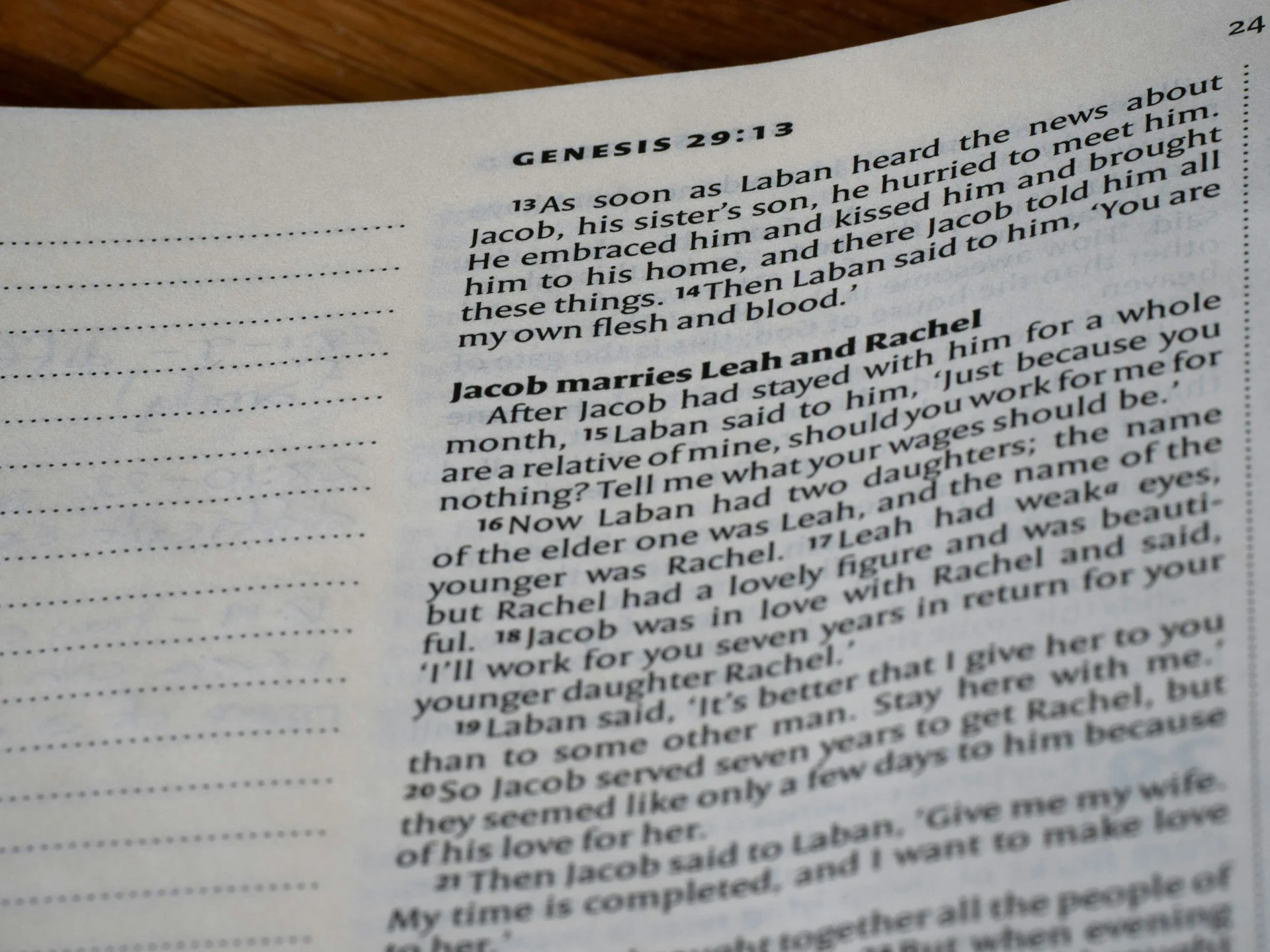
Photo by micheile henderson on Unsplash

Denise Lee Yohn is Co-Founder of the Bay Area Center for Faith, Work & Tech, as well as a corporate keynote speaker, consultant, and writer on brand leadership. Denise inspires and teaches Christian businesspeople to faithfully steward their work vocations as a speaker at churches, events, and conferences including Women Work & Calling and Boldly; and through contributions to media such as The Gospel Coalition and Fuller De Pree Center and her Substack, Called to be…
More Like This:

Help us continue the work of empowering voices. Give today.