Letter from the Editor:
The Gift of the Asian American Church to Western Christianity
By Clark Fobes
Six years ago, the Asian American Christian Collaborative (AACC) began with a collective statement with signatures from over 10,000 Asian American Christian pastors, leaders, and community members denouncing the rise in anti-Asian hate during the COVID-19 pandemic. Included in this statement were calls for a reclamation of biblical justice and an urging for Asian American Christians to find their voice in the public sphere. This statement was followed up with others condemning gun violence, the dehumanization of immigrants, and rejecting white supremacy. Since then, AACC has advanced its mission to “equip, empower, and encourage Asian American Christians towards holistic discipleship” by offering resources for the local church, gatherings for Christian leaders, and bringing awareness to Asian American Christian stories and histories.
Like many others, I was first introduced to AACC through the inaugural statement and gladly signed my name in protest, especially as our nation saw a rising brand of Christianity that seemed out of step with the kingdom of God. As I’ve navigated my own cultural belonging and philosophy of ministry, I’ve often felt caught in the middle between two sides of the spectrum. One the one hand, upholding historic biblical principles meant adopting the cultural garb of White conservatism. But on the other hand, to raise any questions of Asian American identity and faith (e.g., racism, contextual theologies, systemic injustices) labeled me as “woke” and progressive. While both sides have their variety of expressions, the circles I found myself in were either beholden to an orthodoxy that felt more cultural than biblical or freely jettisoned even basic tenets of the Christian gospel in favor of justice-oriented advocacy. The vast majority, however—both White and Asian—seemed either indifferent at best, or dismissive at worst, of the Bible’s call for justice. That is, until I found AACC.
Over the years, I’ve greatly benefited from the friendships I’ve made within AACC, especially as I’ve found other Asian American Christians pursuing a multi-faceted holistic discipleship—holism with the biblical view of the kingdom of God, and holism in integrating our Asian American identities with our faith. As a mixed-race Asian, I’ve often felt out of place in most traditional Asian American Christian gatherings. My passing-White face has meant I’ve had to constantly justify my Asian American identity and presence in such spaces. Despite the good of these Asian American Christian spaces, many have felt narrow in their purview, primarily centering East Asian voices. AACC, however, sought to represent the vast diversity within Asian American Christianity, celebrating our varied cultures while uniting us over a shared vision of the kingdom of God.
As we continue to discern how to widen the net of voices within AACC, we want to continue to elevate perspectives that have often been overlooked, both within the broader American Church and even within our own Asian American Christian circles. But we also want to continue clarifying how we accomplish this mission of equipping, empowering, and encouraging Asian American Christians everywhere with a holistic view of the kingdom of God and our cultural identities.
Our editorial team has done an amazing job of publishing content that fulfills this mission and resonates deeply with the diverse community within AACC. We hope to build upon this foundation by continuing to publish articles and podcasts that speak to our unique, diverse stories through the lens of Christ and his kingdom. But we also hope to pursue holism by continuing the legacy upon which AACC was founded. Perhaps now, more than ever, the American church is in desperate need of pruning and refining. The shoot of American Christian Nationalism has sprung up like a weed amongst the wheat, continually squeezing out and suffocating dissenting voices as it spreads. Asian Americans continue to feel just as afraid and prejudiced against as during the pandemic years.
Amidst the growing confusion and conflation of Christianity with a political agenda, Asian American Christians inhabit a unique and crucial space to bring correction to the American church. My hope is that AACC would be a leading voice to lovingly call for that correction and boldly pave the way forward. In the coming months, we hope to expand our content to include topics that regularly address current events and political issues, resource the Asian American church (and beyond), and resolutely call the church to bear witness to the kingdom of heaven over any kingdoms of the earth. I hope that our upcoming series “Asian American Interpretation of Scripture” will be an encouragement to you all in regards to these goals.
I wholeheartedly believe the Asian American church, when embracing her God-given cultural identities, can be an agent for healing and change in American Christianity. As a missiologist, I’ve often taken my cue from other White missiologists in the Western world. Lately, however, many have been sounding an alarm that may resonate with those of us ministering from the social and cultural margins. Mark Sayers, an Australian pastor and thought leader, has frequently called the church to learn to function as a “creative minority” in light of the waning influence of Christianity and the continual rise of secularism in the West (see Disappearing Church andReappearing Church).
Even more pointedly, the leading Dutch missiologist Stefan Paas has argued that to maintain faithful witness in a secular age, the church must reclaim its identity as a pilgrim people, “alien and marginalized” in the world. In Pilgrims and Priests, he points to minority churches as a model for this “marginal existence without much power or influence” to function as a “hopeful” yet “prophetic minority” in society. Paas articulates a truth that I believe majority (White) churches must heed now more than ever: the key to present faithful witness is held within the very being of the minority churches in the West. Who better to lead the charge into faithful witness from the margins, as a hopeful yet prophetic minority, and as “alien and marginalized” in the world, than the Asian American church?
One of my greatest joys in ministry has been encouraging and instilling in Asian American leaders the need for our voices to be platformed and heard. I believe it’s not simply good for us and our development; our voices are vital for the faithful witness—both present and future—of the American church. The Asian American church is truly a gift to Western Christianity, for its purifying role and presence for the kingdom of God in our broken world. I’m privileged to step into this role as Editorial Director, and I look forward to partnering with the many faithful writers, leaders, speakers, and thought leaders who have already given of themselves towards this vision. And I’m eager to partner with many more of you who may have yet to add your voice to this diverse collaborative, in hopes that you will find the unique ways God has formed you to speak life into spaces in need of renewal.
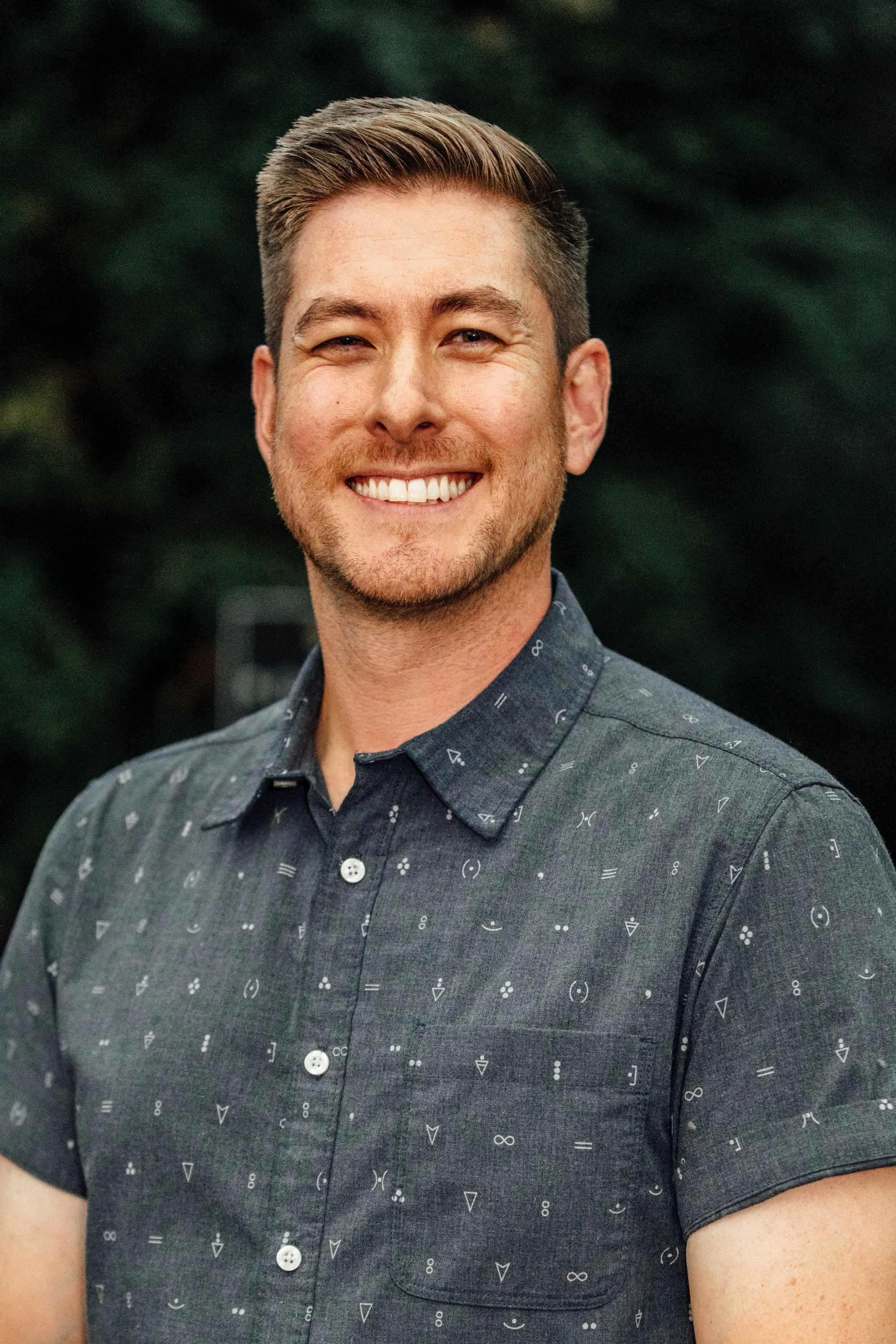
Clark Fobes is the Editorial Director for AACC, and serves full time as the Associate Pastor at First Baptist Church of San Francisco, a diverse, multi-ethnic, multi-generational congregation in the heart of the city. Prior to this, he served in both Student and Worship Pastor roles in Asian American and Asian immigrant churches (both Korean and Chinese). Being half-White and half-Korean, issues of culture and faith, and their intersection in history are central to his research and teaching. He received his M.Div at Talbot School of Theology and a Doctor of Missiology (D.Miss) at Southern Seminary. Clark and his wife Janet have two young daughters and live in his hometown of San Francisco.
More Like This:

Help us continue the work of empowering voices. Give today.