The Gospel of Waiting in a One-Minute World
By Stephanie Wong
P
atience, perseverance, anticipation, and hope.
These are the elements missing from much of today’s storytelling—lost in today’s skilled translation as stories are condensed into short-form, easily digestible media.
Recently, I stumbled upon a two-minute Instagram reel that abbreviated an emotional, moving story of a crochet dinosaur and fox that I had originally watched almost a decade ago as a seven-minute short film on YouTube. On Instagram, I loved re-watching the 2-minute reel format that was perfectly bite-sized, emotionally charged, and action-packed in the blur of fast seconds and frames. Yet when I went back to rewatch the original seven-minute YouTube film, I realized how much of the emotion and impact of the story had been lost in the compression. While the short format evoked emotional punches through quick cuts, swelling music, and dramatic highlights, the story moved so quickly with so much action in each shot, I couldn’t help but feel overwhelmed with emotional gut punches.
The longer-form YouTube film, on the other hand, offered texture. There was so much more depth and variety in pacing that allowed for more space and breadth for my humanity, reaction, and emotion. Lingering shots, deafening silent breaks in musical peaks, and slow camera pans allowed me to pause, absorb, and resonate with artistic moments that captured what it means to be truly human. The immediate comparison made me realize how meaningful it was to consume longer-form stories that varied in pace and rhythm and that allowed space for silence, tension, and release—not just relentless motion.
The stories we consume also shape the stories we tell ourselves.
While the old “American Dream” of the 20th century was built on the values of hard work, endurance, and the trust that persistent effort would one day lead to sure fortune and success, the stories we create around ourselves and consume these days have been morphed around a newer “American Dream”—one based on the hopes of lucky strikes and instant successes. While our Asian immigrant ancestors labored quietly over years, even decades, to build their security in a new country through grueling workdays at shops and restaurants, not only for themselves, but also for future generations, our newer generations yearn for quicker successes that come in the span of months or a few years. Being raised by Asian parents and fed the narrative, “work hard, and you’ll get somewhere”—a combined philosophy of the Asian work ethic and the American Dream—we anticipate hasty delivery to a destination, proportional to our effort. We begin to believe that effort should produce immediate results, forgetting that hard work is only one factor among many others, such as economic conditions, political stability, global crises, health, and chance, to name a few.
Short-form media feeds our longing. We scroll through perfectly curated reels of cooking videos in pristine kitchens, crisp “outfit of the days,” and perfect 9-5 daily routines filmed in spotlessly-designed homes. We see the greatest peaks and strongest life highlights of “influencers’’ and “strangers’’ all edited into moments of perfection. What we DON’T see are the unrecorded perspectives of messy kitchens and hours of home clean-ups, hours-long video editing, failed attempts, nights of doubt, and unseen breakdowns that make those highlights possible. It becomes easy to consume these facades and compare how easy their lives are, as we internalize the subtle narrative that life should be smooth, quick, and cinematic.
Soon, we long for the story arc of our lives to feel the same way, or quickly grow hopelessly disheartened when things don’t work out for us. We lack to plan into our lives the swelling music of waiting, the unassuming rising action that comes in our stories before the stimulating climaxes and life’s highlights. We forget that lulls are a critical part of the buildup of our stories. We are told as children by our parents that “if you work hard enough,” we’ll get somewhere, so we begin to internalize shame when it takes longer than we anticipate to arrive at our desired destination. We determine that we are “not working hard enough,” and we minimize the significance of not “being there yet”: the waiting, the process, and the lessons God may be revealing to us in these vital seasons.
We forget that life, like good storytelling, is not just a collection of highlights, but is also dependent on lulls, build-up, and moments that feel slow or significant. These moments are shaping something within us and give our stories the most weight.
Patience, perseverance, anticipation, hope.
And isn’t that the rhythm of the greatest story ever told? When we look at the Bible, we see that roughly three-quarters of it (the Old Testament) is a chronicle of waiting and longing. We often hear sermons drawn from the New Testament, focused on how to live in the aftermath of redemption, but the reality is that the majority of Scripture is a lot about anticipation — the ache before fulfillment.
Generations wandered, kings rose and fell, and nations waited for a promised Messiah they would never see. Even in the great Christmas story, the wise men were scholars and astronomers who heard of the coming Messiah, and spent years in quiet anticipation and preparation. What’s written in Matthew is the action and the highlight of the wise men coming before baby Jesus to honor and receive him, but what we do not see is the waiting. The droning years they spent analyzing sacred texts, learning languages, and studying the stars so they could recognize the appearance of a special star when they saw it. If this were a movie, perhaps we’d see those quiet scenes -- the candlelit studies, the purchase of gold, frankincense, and myrrh in bustling marketplaces, the nighttime treks through desert silence – that emphasized how significant it was for them to partake and see a prophecy fulfilled. If it were a short reel, maybe it would have just been an “unboxing” of perfectly-wrapped gifts, a 2-second snapshot of the camel journey accompanied by a “Jet2Holiday” backtrack, and a collage of the best group shots of them together with baby Jesus. Who’s to say?
There is so much power in the waiting.
As we stand here, on the cusp of Christmas, of yet another year packed with headlines and heartaches, it’s easy to feel overwhelmed with hopelessness. The world is on fire and our feeds are saturated with an uncomfortable, yet somehow now normalized, oddly-woven collage of contrasts of cute cats, starving children in Gaza, strawberry matcha, burning forests, Labubus, ICE raids, and more news on economic downturns and layoffs. Each year feels “unprecedented” and we long for something “precedented” for once. It’s hard not to grow a callous skin of indifference and a humor-driven hopelessness to protect our weary souls. But in all of this, it’s important to remember that there were so many who came before us who endured hopeless times, and yet waited hopefully.
Just as Jesus came as a baby approximately 2025 years ago to fulfill the hope of deliverance and reconciliation with God, there is a promise of a second coming of deliverance where all things will be once again made new. We must remember that this story of waiting is not a story of passive resignation or hardened indifference, or a fatalistic belief that nothing will change the trajectory of this cruel world’s demise. The story of redemption is not one of instant resolution, but of patient faith. And just because we cannot see what is to come does not mean we do not wait in anticipation and long-suffering for the story yet to be unravelled.
So we wait.
Not with nihilistic demise, but with patience, perseverance, and anticipatory hope.
We wait for the coming of our future groom and a new world made perfect once more.
(In the meantime, let’s make these waiting scenes as beautiful and filled with joy and love as we can.)
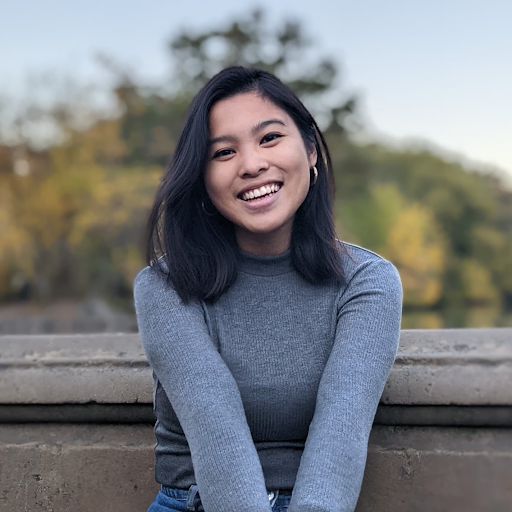
Stephanie Wong is a social impact professional based in Austin, Texas. She graduated from University of Toronto with a dual degree in International Development and Political Science, with a minor in Economics and works at the intersection of research, communications, and nonprofit, foundations, and corporate partnerships. Having grown up in Hong Kong and then later moving to America in her adult life, with ancestral ties to Canada, she carries the unique experience and identity of being both a fourth-generation, yet first-generation Asian-American immigrant. When she isn’t reflecting on her spiritual and cultural identity, she can be found exploring every café in Austin, playing pickleball or climbing, or experimenting with new recipes at home.
More Like this:
Help us continue the work of empowering voices. Give today.