The Space Between Understanding
Reflections of a Mixed Girl’s Wrestling Between Dreams and Honor
By Anh-Mai Kearney Zubia
I
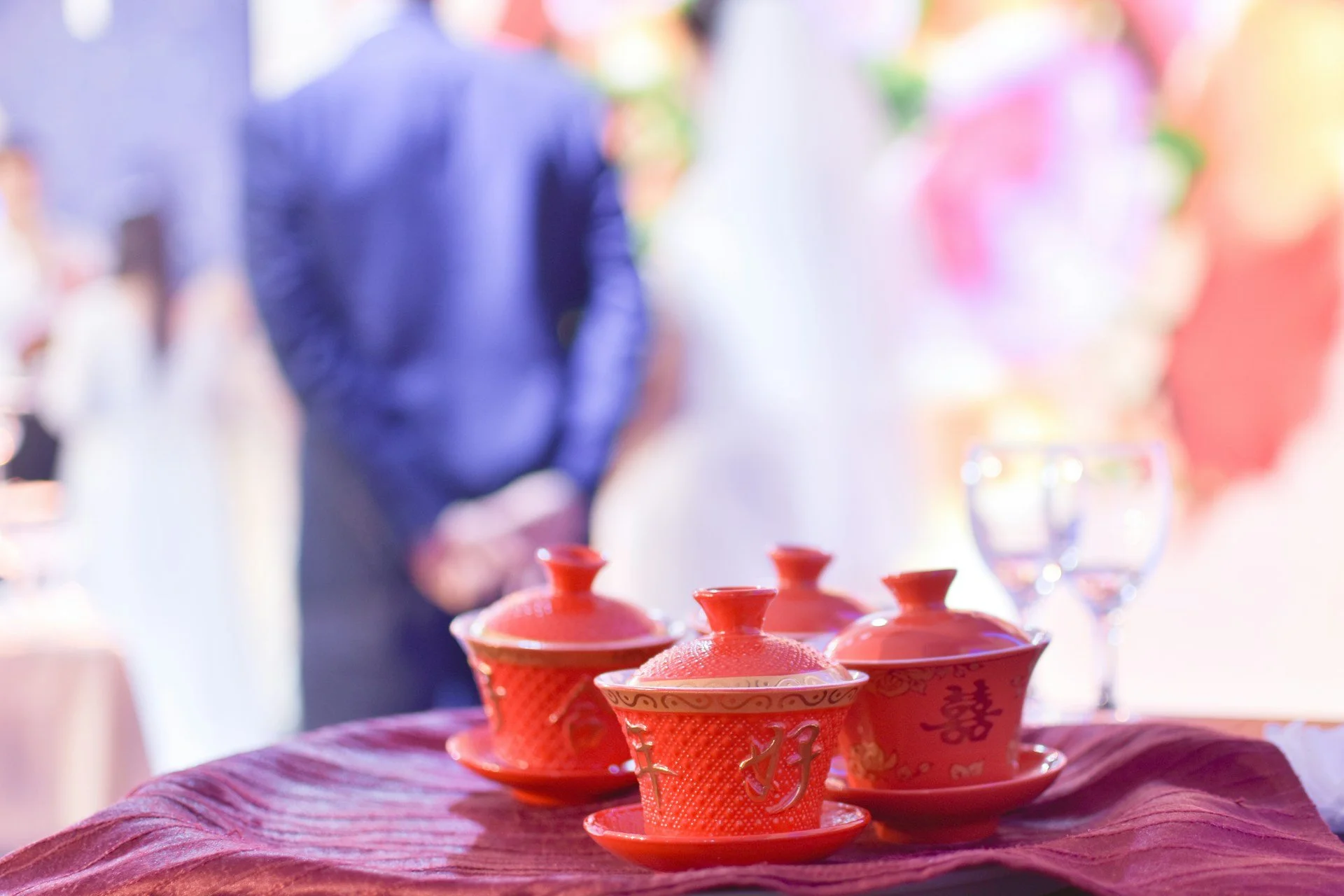
t was the week of my wedding and the day before my tea ceremony. I sat in my aunt’s dining room as she painted my nails with what I considered a bridal shade of mauve, feeling the weight of her nimble hands place tiny sparkles along the curve of my cuticles. Music and chatter echoed around the house as my aunts finished the signage I never asked for. Covered platters of red boxes were stacked by the front door. As I chatted with my bridesmaids, sound enveloped the home the way it does when all of the people you love are in the same space. Raised shouts in a language I’ve never understood indicated that something important was coming..
My hands were glowing blue beneath the UV drying light as my cousin Christina interrupted, “Hey Ánh-Mai.” She leaned against the wall with the casual nonchalance of Gen Z. “Ngaoi wants to see you in her room.”
I furrowed my brow. “Did she say why?”
“Nope,” she replied, popping the “p” before turning away. Alright, then.
My grandma is the family matriarch in every sense. She was the orphanage mom to over eighty orphans who managed to survive the harrowing journey to the US in the 70s. She was a figure of both the love and the fear of God in my childhood, and every bit the tiger mom according to my own mother. My mother, who graduated as salutatorian partially due to my grandmother’s strict ways. My mother, who was nearly disowned for choosing to marry a white man before my grandmother eventually came around before her wedding.
So as her granddaughter who never showed any aptitude for grades other than, what my sister and I called “crooked-all-A’s” (all A’s and a few B’s), I was familiar with the same unique sigh of disappointment my mother might have experienced ten-fold. I had dressed in fairy costumes, daydreamed stories, and was more engaged on a stage than in school.
She never loved me less for my uniqueness, even if it befuddled her at times. However, she seemed visibly relieved once I began to use my musical and storytelling gifts as a dedicated member of my worship team. I served in that role throughout high school and even returned as an intern between my freshman and sophomore year of college while many others in my class of music theatre majors were performing across the country.
I was driving with her in the car that summer and she asked me what I wanted to do after college. “I’m not sure, Ngoai,” I said honestly. “I just want to follow what God has for me.”
“Yes,” she replied. “Worship leader. Or marry a pastor.” She nodded to herself, satisfied in the options she felt like God had for me.
I smiled tightly. “We’ll see.”
While that is a beautiful life for so many, I didn’t have the heart to tell her that I felt called to something different, something…more out there that I couldn’t put words to. How could I express that following God’s will for my life didn’t necessarily coalesce into a life within the ministry walls of a church or married to a man whose life did?
At the end of that worship internship, I turned down the offer to begin a job with that church. I didn’t tell her it was offered. Not that I thought she would be disappointed. But because I felt that this journey of the ambiguous concept of “calling”—how God would use my life and my days—was between Jesus and me alone. A friend of mine reminded me of what our calling truly is as Christians: “Jesus said the most important commands were to love the Lord your God, and love your neighbor as yourself (Matt 22:36–40). So, I think if you’re trying to do that, you’re not going to make the wrong choice. He also said go and make disciples (Matt 28:19). So, I don’t know, Ánh-Mai, just go.”
Where I felt most alive and aligned in who God made me to be was when I was pursuing musical theater. There was something that zinged through my blood when my voice teacher commended my high notes as “glorious.” There was a part of my soul that bloomed when I cried out the same words that many others had sung before me. When I was interacting with my peers who didn’t know Jesus, had questions about my faith, or even vehemently disagreed about the value that Christianity brings to the world, I was introducing them to Jesus.
I’d returned to school with a renewed sense of calling. I graduated in 2021 with a dual degree in musical theater and vocal performance, signed with an agent, and planned to move to New York City sometime after the wedding.
I opened the door to my grandmother’s room. “Christina said you wanted to see me,” I said.
There were many things she could have wanted to tell me the day before my wedding—a blessing before the big day, an instruction from God, a rebuke that my dress was too low cut, or even just that my family was driving her crazy. The options were endless.
With her gentle hands, decorated with veins of blue and spots that conveyed stories of a life well lived, she patted to the bed, gesturing for me to sit beside her. “What is this your mom says about moving to New York after you get married?”
Ah, understanding clicked for me. I, her mixed, very American, dream-chasing granddaughter had not looped her into my future plans. Guilt and shame flooded me.
“Yeah,” I began, before her look had me correcting, “yes, Ngoai. That is that plan.”
She tsked, turning her nose up. Whether it was from my use of “yeah,” a word she abhorred, or from the prospect of me moving to New York, I wasn’t sure until, “New York is evil,” she said. “Stay here. In Texas, in the south. It’s better. What will you do in New York, hm?”
Lots of thoughts went through my mind: Why on earth do you think New York is evil? Texas isn’t? I guess it depends on your definition of good and evil. But the one I really chewed on: How can I make you see and understand?
I took her withering hand in mine, the same hands that raised me up, the same hands that taught me how to read the Bible, the same hands that fed me purple yams, and I sighed. Because as a musician, I’ve been trained to hear what is both in sound and silence. Because as an actor, I’ve been taught to read between the lines. Because as a mixed child, I hold a distinct universe of two cultures, and yet, neither of them at the same time. Because as a Vietnamese girl who didn’t speak the language, I learned to navigate meaning in the space between understanding.
So I knew when she said, “New York is evil,” she was really saying, “I’m afraid for you.” With the violence in 2021 against Asians in New York City at the time, I didn’t blame her. When she said, “Stay in Texas, in the south,” she was really saying, “Stay close to me, my beloved grandchild.”
My sister had told me once, “When I moved to Austin from Houston, oh my gosh, I had never heard her so mad and speak such clear English to me at the same time.” Austin was only three hours from Houston. New York was across the country.
There I was, at the crossroads of cultures again, attempting to translate. “Well,” I began, “I feel God calling me to New York. To do theater.” She shook her head. The American ideal of chasing your dreams was something she didn’t fully grasp. I continued, “If you think New York is evil, who is going to love them like Jesus?”
“Like a missionary?” she asked.
“Sort of?” I replied.
It was the most honest answer I could give her. And to a degree, it’s accurate. Taking the faith she gave me out into a city I love or an industry I believe in is a missionary act, but defining that was just one of the many translations needed. There was more in me I didn’t know how to say. Not only was there a language barrier between us, but a whole life, a whole imagination I had for myself that I struggled to convey.
My framework of obediently pursuing God’s calling was different. It didn’t look like the rejection of my dreams, but of desires fulfilled by embracing the creativity God created me with. Living on mission looked like the small obediences of everyday life in trying to love God by utilizing my gifts. Where my grandmother might see God’s words as rebuking sinners into repentance, I read Scripture and saw those who hated Christianity as people Jesus longed to love. This was the way I knew best to bring the Gospel forth and honor her sacrifices.
She was a woman who had sacrificed much. She had sacrificed her home, her siblings, and her own language. She had sacrificed her days and her time to bring up not just her own children, but those without their own mothers, then later her own horde of grandchildren. She had sacrificed romantic relationships for the love and calling of God and the good of her family. She had sacrificed much more than I’ve ever had to.
I often ask myself, Who am I to get a world of opportunities in front of me? Who am I to leave her behind? Who am I, to have the privilege to not just survive, but thrive?
In my moments of wrestling, I’m gently reminded of Psalm 139, “For you formed my inward parts; you knitted me together in my mother’s womb. I praise you, for I am fearfully and wonderfully made…” (Psalm 139:13–14 ESV).
God brings up and brings forth the beautiful ways he created me. For so long, I feebly attempted to honor the idea of life as a good Vietnamese granddaughter. But honor doesn’t always look like existing within the imagination of those who came before you. Sometimes it looks like taking their sacrifices and creating a life they couldn’t have imagined, going forth into the great unknown with the values, the love, and the legacy they paved the way for.
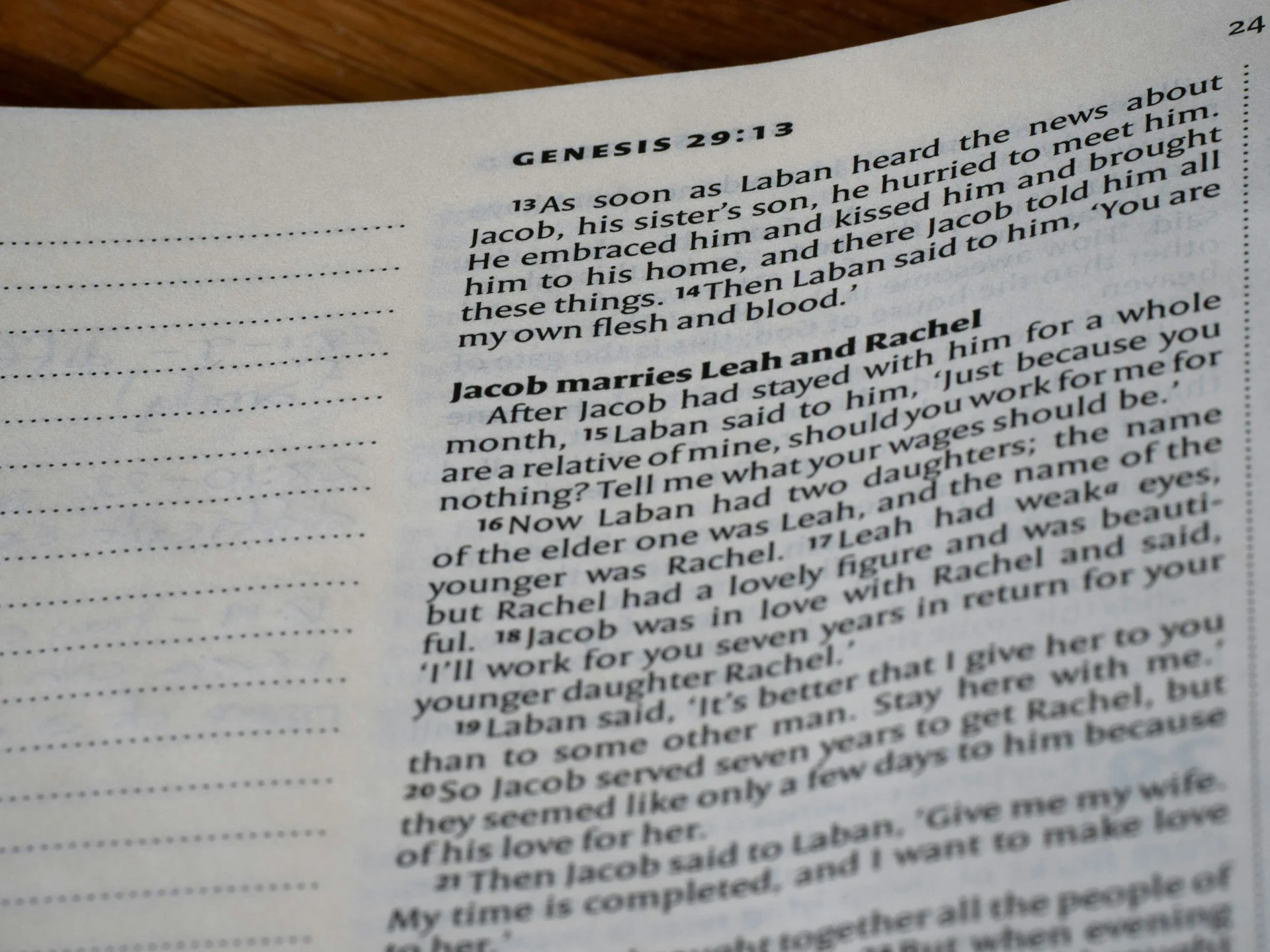
Isaiah 43:19 (NIV) says, “See, I am doing a new thing! Now it springs up; do you not perceive it? I am making a way in the wilderness and streams in the wasteland.” When Isaiah declares this, he is telling God’s exiled people to look towards something new for their deliverance; it is not the same way he has done things before. God is a god of new things and new ways. So I bury this in my heart, reminding myself that it isn’t wrong to break patterns when your people are in a different land. Following God in something new is actually an old discipline from my spiritual ancestors in Scripture, a gift of faith I can present to my living elders.
So when she prayed for me the night of my tea ceremony, I was dressed in my red ao dai with her hand on my shoulder and my forehead bowed to meet hers. And I knew, while I might not have her full understanding, I had her blessing to walk into the unknown, carrying with me the faith she’d gifted me from all the years before.
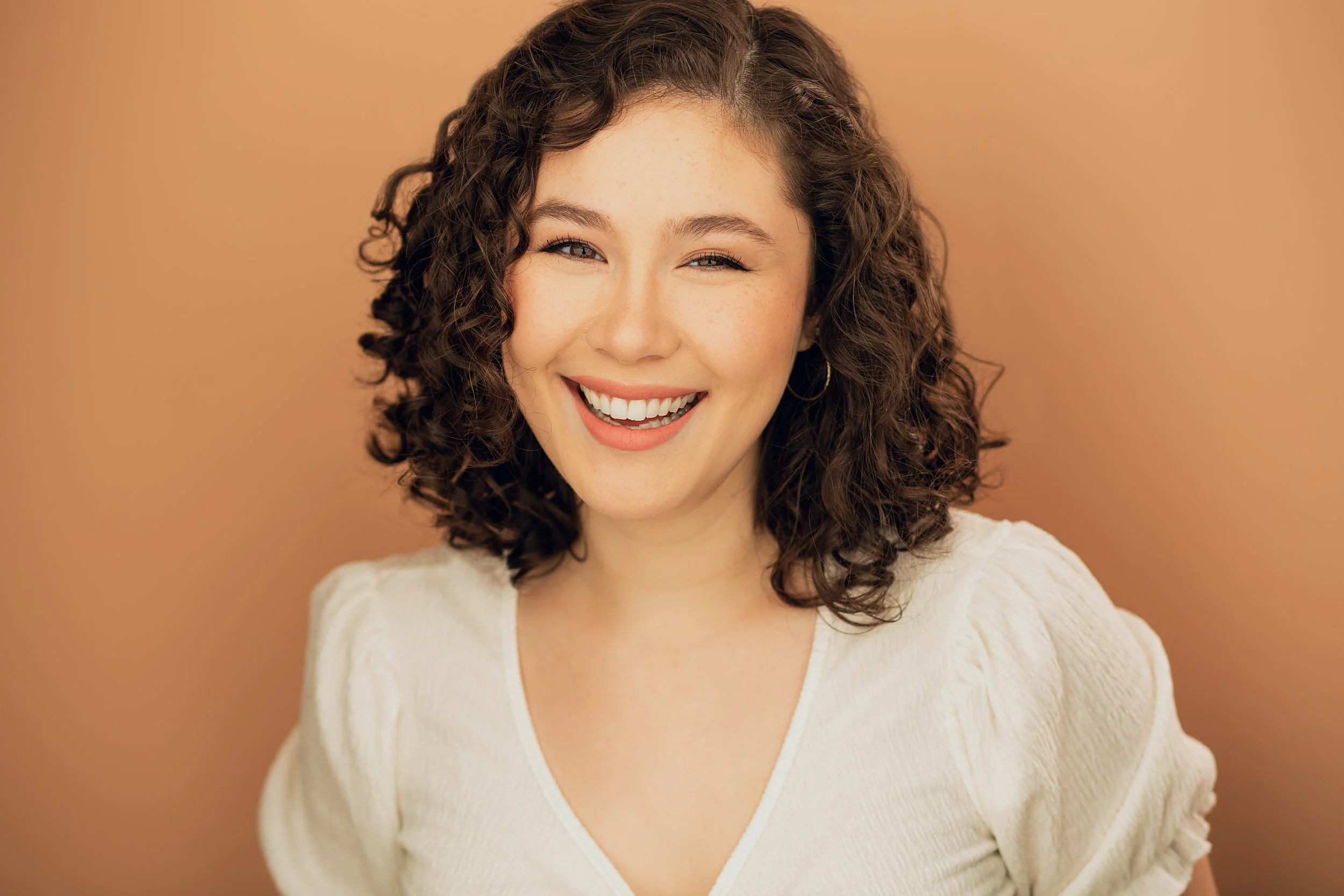
Anh-Mai Kearney Zubia is is an actress and singer based in NYC. She graduated from Oklahoma City University with a dual degree in Musical Theater and Vocal Performance. When she isn't performing, she teaches voice through her own private studio and serves with many ministries, including but not limited to, The Honor Summit, Rise Collective Women, and her local church.
More Like this:
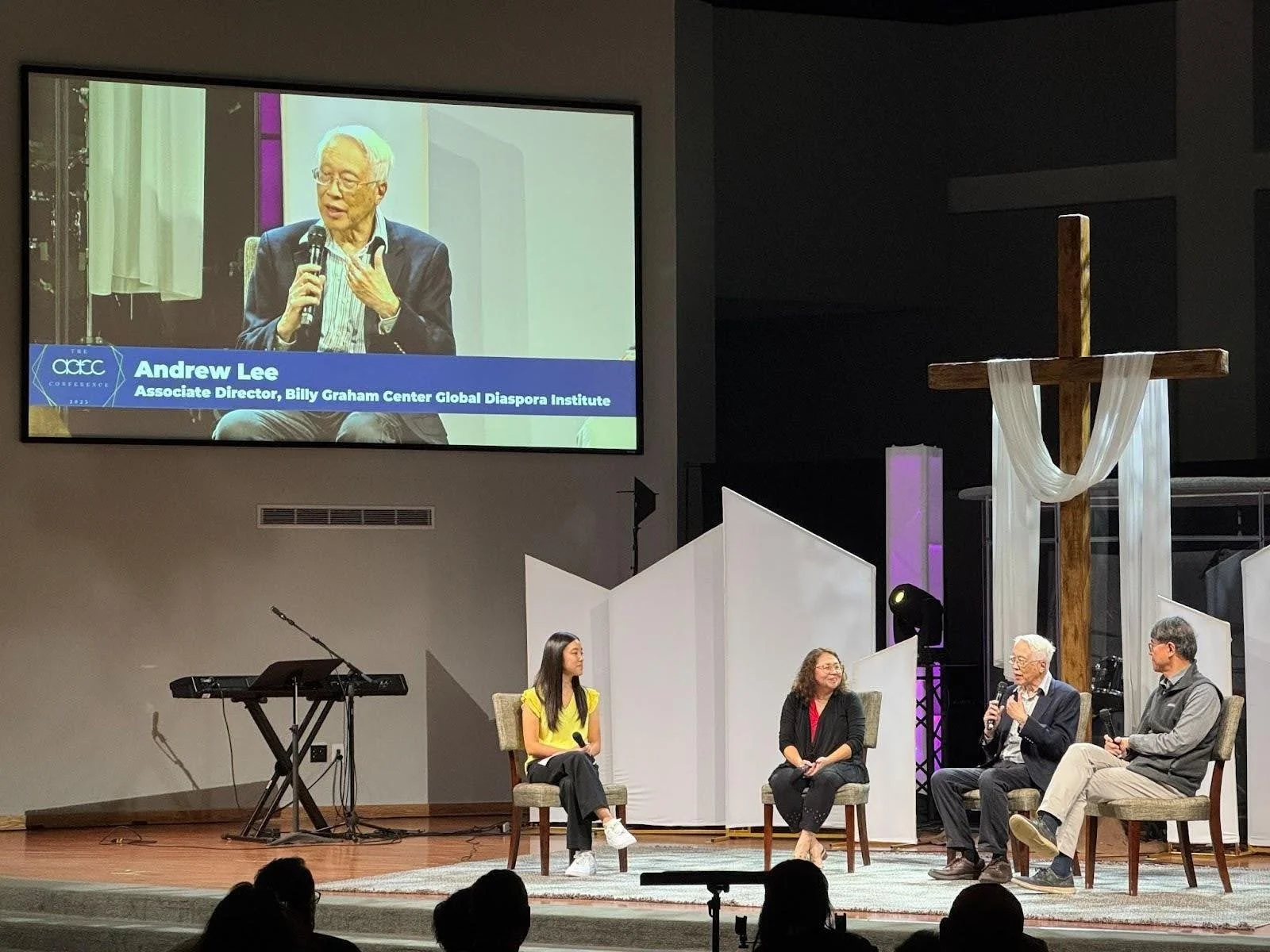
Help us continue the work of empowering voices. Give today.