By Clark Fobes
L
eading up to the 2020 presidential election, I wrote this post reflecting on the prevailing voting method that had been making its rounds amongst evangelical pastors: single issue voting. Six years have passed, and our political landscape in America has gotten even more complex than before. Though many have leaned into this complexity to discern how to best approach voting as Christians in America, the single-issue voting sentiment still remains in some pockets. With a significant mid-term election looming, I believe the issues herein are still important to grapple with as we navigate the grey areas of politics as a people who live for an alternate Kingdom as alternate citizens.
In any given election cycle, many Christians wonder what the “Christian vote” is on a given policy or candidate. While some have wondered how to approach issues on a case by case basis, many have continued to dig their heels into the “Right is right” mentality, voting unilaterally according to Republican ideals. Often, this “Christian vote” has been equated with an anti-abortion stance. Though voting issues have expanded to include the protection of family life and LGBTQ policies, the dominant narrative remains the same: a “Christian vote” requires voting according to these one or two priorities set forth in the Bible that Christians often view as the most important.
Protecting the unborn, the sanctity of marriage, and biblical sexuality become the guiding biblical principles by which Christians should vote. These issues often lead to a ballot cast for the Republican candidates. What is unfortunately absent from these voices are the biblical references to other issues besides sexuality, gender, and abortion—such as the literal hundreds (if not thousands) of verses in the Bible concerning issues of poverty, equity, justice, and immigration. For a variety of reasons, (White and/or conservative) Christians have historically elevated “body politics” (abortion, sexuality, gender) over “brotherhood politics” (poverty, equity, justice, immigration).
Biblical Priority of Political Issues?
As an evangelical pastor, I understand the sentiment. I also don’t disagree with the need to adhere to biblical principles with these right-wing issues. But the more I’ve listened to the prevailing conservative evangelical message, the more I’ve found myself questioning the rhetoric of the historic Right. The Christian Right most commonly argues that a “Christian vote” is a pro-life vote against abortion. While discussions on what it means to be “pro-life” are helpful, conservative Christians continue to maintain the perspective that voting against abortion is the bible’s highest priority.
Abortion is an evil clearly condemned in Scripture (Exo 21:22–24), and the Bible affirms life and personhood from the earliest stages of gestation (Psalm 139:13–16; Luke 1:39–45). I have preached against abortion in the past and continue to believe the fight against abortion must be part of our advocacy of kingdom justice. What I still struggle to understand, though, is how we’ve determined that fighting for reproductive, gender, and sexuality issues are the single greatest issues Christians must fight for politically.
When I see Christians repeatedly advocating for the unborn over and against every other issue involved in American politics, I fail to see a clear correlation in Scripture. Biblically, what requires us to uphold this issue in such regard that it trumps (no pun intended) every other issue collectively stacked against it? The argument is often founded upon the basis of human dignity. Murder against those made in the image of God, therefore, is the vilest transgression. However, why is it that those same Christians seem to be silent over the unjust treatment and murder of other groups also made in the image of God?
The doctrine of the image of God necessitates that Christians care for and protect all life, including that of the unborn. Unfortunately, our political loyalties seem to send a message that we care only for one segment of the population versus others. Conservative Christians are well-versed in arguments that champion the cause of the unborn and are quick to stand their ground on this issue. However, when they are confronted with questions about immigration, racism, and the imbalance of the criminal justice system, most seem either uneducated, uninterested, or even aggressively in denial. Perhaps it is the fact that one group is wholly without voice or choice. The unborn have no voice in the matter, and thus no choice or agency. Whereas the living seemingly have had their chance but have squandered it. Thus, the most voiceless with the least agency are those we must protect over and against all others. James 1:27 does call us, after all, to “visit orphans and widows in their affliction” (ESV). James references the two most vulnerable and voiceless groups during the New Testament times; and who is more vulnerable and voiceless than the unborn?
Though we might agree without question that the unborn fall into this category of “vulnerable and voiceless”, to wholly throw out our obligation to other vulnerable and voiceless groups is not a biblical distinction but a man-made one. If James had room for more than one group whom the church was obligated to care for, then shouldn’t we? What justifies elevating one segment of our population over another, arguing for the protection and rights of one with overwhelming support, while another’s remains ignored by our political affiliations? By the very logic of right-wing Christianity, the early Church should not have cared for the widows, but only the orphans.
The Problem of Moral Proximity and Moral Obligation
The answer to me is quite plain: our failure to compassionately care for the plight of the vulnerable beyond the unborn is a sign not of our biblical convictions, but our own inability to identify with and extend Gospel love to those outside of our purview. The problem lies not with those other “undeserving” groups, but with us.
In ethics and moral philosophy, there is a common principle that moral proximity leads to moral obligation: if I am relationally more proximate to one person or group over another, then I am more morally obligated to help their cause than the other. This line of reasoning has also influenced how we think about social justice in the church (see DeYoung/Gilbert, What Is The Mission of the Church?, 183–186).
Modern moral philosophers have pointed out that the principle of moral proximity never leads us to care for those beyond our own confines. This means we would never feel obligated to care about those different from us—whether geographically, racially, socially, familial, and the like. By this logic, we should side with the Jewish lawyer over Jesus when defining who are neighbors are. When confronting an expert in the Law who asks Jesus this question, “Who is my neighbor?”—a question of moral proximity—Jesus responds with a parable defining neighborly love that extends across social, racial, economic, and geographical lines (Luke 10:29–37)—a statement about moral obligation. The biblical view of moral proximity should completely disrupt the world’s way of defining moral obligation. And yet it is this unwillingness to move beyond moral proximities that has led to increasing division and lack of concern for the American church across tribal lines.
So, while the Bible repeatedly calls for the “dividing wall of hostility” to be broken down between racial divides (Eph 2:14–17), our churches have remained largely segregated, both physically where we meet and spiritually in who we care for. Though God seems to call Israel to lovingly and sacrificially care for the foreigner and sojourner (Exo 23:9; Lev 19:9–10,33–34; Deut 24:19), most White American Christians have maintained a posture of fear and aggression towards immigrants. Though Jesus engages with and talks about the poor more than any other group in the Gospels, the evangelical middle class has remained distant and unconcerned with those who seem to have “failed”—be it economically, socially, or professionally—under our free-market capitalistic society. The burden of moral obligation remains solely on the self, and not on those of us who have chosen to stay morally distant from the underprivileged.
Making this single issue the crux for all of our voting, then, is not a sign of biblical faithfulness, but a sign of privilege. As someone who used to be a proponent of single-issue voting, I speak collectively with those who have perpetuated this dogmatic view of politics. We have waved the banner of “biblical fidelity” while failing to acknowledge that it is our privilege that has allowed us to vote with such single-minded focus. This privilege has protected us from worrying about our next meal, the stability of our family, or the urgency of mortality due to the color of our skin.
It is our privilege that has caused us to see so clearly the commands to care for the unborn, while other biblical commands have conveniently shifted to our periphery. If we have never identified with or been morally proximate to other vulnerable and voiceless groups like the impoverished, the immigrant, or the person not-like me, then we are far less likely to advocate for the rights of those groups. Without such moral proximity, there is little need for moral obligation.
Voting Beyond Our Privilege
For Asian American Christians, how can we navigate politics in such a way that we do not fall into these errors of moral proximity? How can we approach politics as we continue to wrestle with our own complexities as a people who have gained certain privileges in America, but remain perpetual foreigners?
As Asian Americans, we can be honest about those groups we have been more morally proximate to—and thus, felt more morally obligated to—than others. The rise of anti-Asian hate during COVID was a clear example of Asians caring about social issues affecting their own population. My Asian church at the time was outspoken and vigilant to condemn the harm being brought upon vulnerable Asians, especially women and the elderly. Just weeks before this spike in attacks, our church also marched for the dignity and protection of Black brothers and sisters post-George Floyd. Unfortunately, few seemed to care, and even were against our cause, revealing a lack of moral proximity of our congregants to Black communities.
What little privilege we’ve gained as Asian Americans should not cause us to shut out those different from or beneath us to maintain what we’ve hustled and scraped for. The Christian’s relationship to power is one of the greatest signs of how we’ve come to understand the gospel. As Jesus declared, it is not the rich and powerful, prideful and well-fed who will inherit the earth (a wholly human—and uniquely American—view of life and politics), but the poor and meek, the grieving and the hungry (Matt 5:3–6).
Voting according to Jesus’ kingdom politics, then, may look like voting to empower others at the expense of ourselves—or even the loss of our own power. Voting for policies that may disadvantage us and the wealth we’ve created after generations of clambering up the ladder of the American Dream may seem foolish, especially considering the sacrifices our immigrant predecessors made. However, this very foolishness to sacrifice ourselves for the elevation of others is the embodiment of the gospel the New Testament calls for (1 Cor 1:18–31). What greater way to demonstrate our singular hope and belief in the scandal of the Cross than to disadvantage ourselves so others might live?
On the other hand, Asian Americans are a community continually in a state of disadvantage in America. Though many of us have been fortunate to attain the American Dream—no matter how little a slice of it we’ve experienced—many of our national brothers and sisters have not. As Asian Americans, we can vote in such a way that we lay ourselves down for the sake of others, even our own countrymen and women here in America.
My desire is not to advocate for the Left or a Democratic vote; rather, I hope to reveal, as others have done so, that just as there is no one “Christian vote,” neither is there “one Christian policy” that supersedes all others in such a way that dictates how we vote across the board. To demand such an equation of Christianity to only one political policy or party would be to equate the Gospel with only one culture’s values. Just as the global church is a diverse body, so the Gospel is too diverse and multi-faceted to allow for only one culture to dictate how the rest must think about politics.
Many will naturally disagree with the arguments laid out here and continue to advocate for a political position that protects their own privilege, Christian or not. But my desire is to show that there is more to our vote than one single issue, and that we can remain actively pro-life while voting in a seemingly contrarian way. Come election day, I believe Christian liberty should allow us greater discernment and critical thinking in how we vote, rather than an extra-biblical binding of our consciences.
We are earthly citizens, so we must engage in earthly politics; but we must not let our privileges lead us to claims that Jesus would never have made himself. Ultimately, we belong to an other-worldly kingdom, so what matters most is how we live out the ethics of the kingdom to come. While we may disagree on how that kingdom should be displayed on earth, hopefully we can maintain the unity of agreement when it comes to what is truly necessary in being a kingdom citizen—namely, adherence to our King Jesus through the path of the Cross.
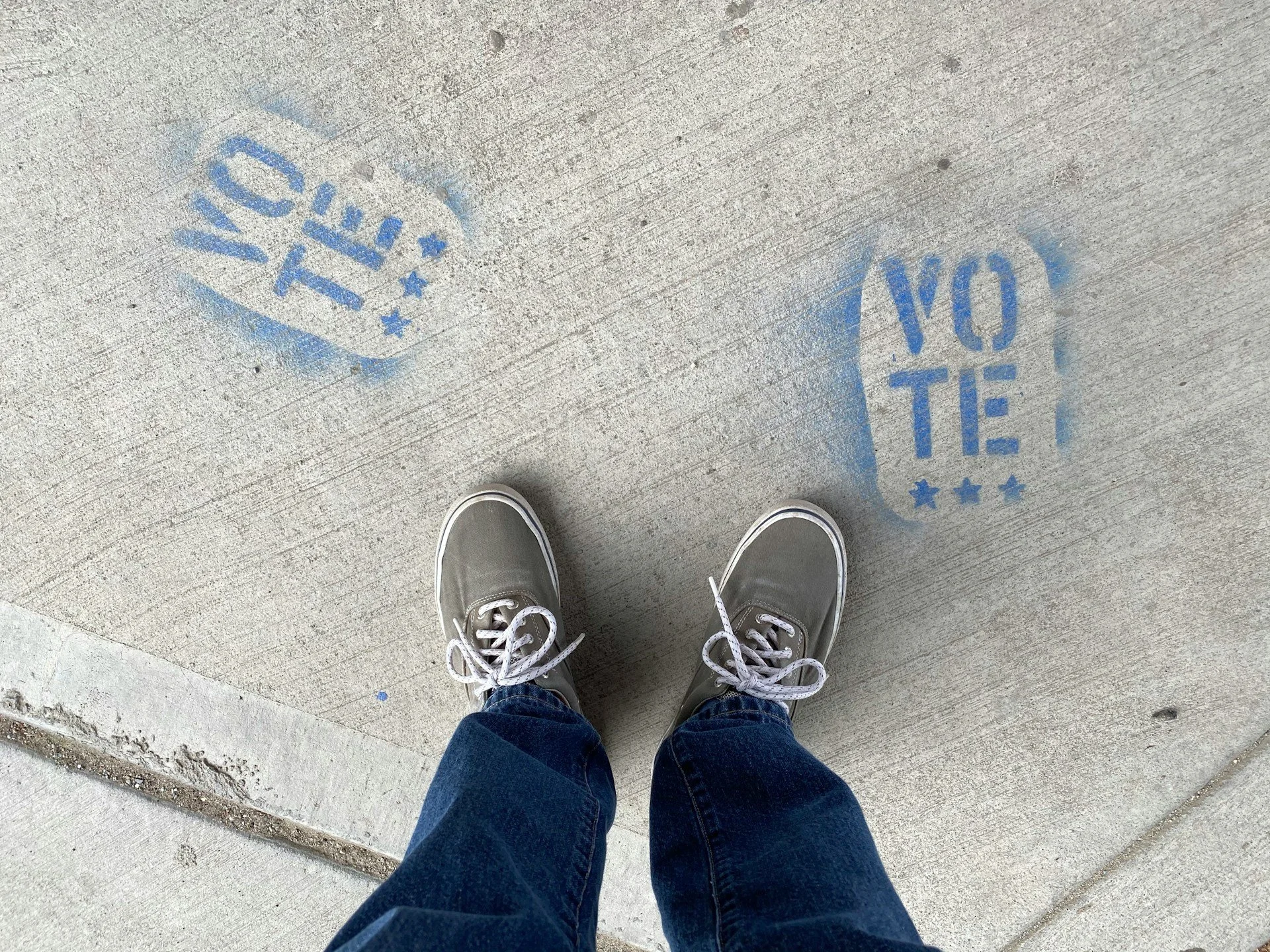
Photo by Phil Scroggs on Unsplash

Clark Fobes is the Editorial Director for AACC, and serves full time as the Associate Pastor at First Baptist Church of San Francisco, a diverse, multi-ethnic, multi-generational congregation in the heart of the city. Prior to this, he served in both Student and Worship Pastor roles in Asian American and Asian immigrant churches (both Korean and Chinese). Being half-White and half-Korean, issues of culture and faith, and their intersection in history are central to his research and teaching. He received his M.Div at Talbot School of Theology and a Doctor of Missiology (D.Miss) at Southern Seminary. Clark and his wife Janet have two young daughters and live in his hometown of San Francisco.
More Like This: