By Daniel Harris
I
remember learning for the first time about honor/shame cultures in college. Coming from a Cambodian background, it made so much more sense of my experience. Up until that point, I had not realized how much shame defined how my family acted towards one another. It also changed the way I read Scripture, as I learned that the Bible was written in an honor/shame context. Reading Scripture through the lens of shame was a powerful and liberating experience. I came to terms with the shame brought upon Jesus through the cross; and I accepted because of the resurrection, shame no longer defines who we are.
Asian Americans have long dealt with the powerful force of shame in their lives. However, recent trends in broader American society have shifted such that emerging generations such as Gen Z and Gen Alpha appear and act much more like people in honor/shame societies. The rise of social media has made way for public displays of shaming. Younger generations often feel like they have to self-censor and save face. The fear of cancel culture has intensified the feeling of shame.
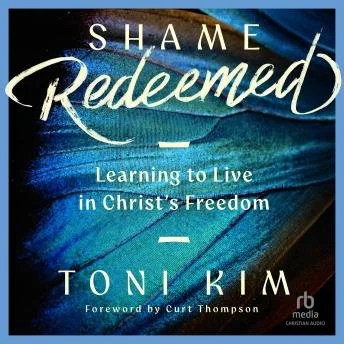
This shift in American culture gives Asian American Christians a tremendous opportunity to speak boldly to emerging generations about how God uses shame to accomplish his purposes and ultimately redeems it for the sake of the world. This is exactly what Toni Kim sets out to do in her new book Shame Redeemed: Learning to Live in Christ’s Freedom.
While Kim is a Korean American, this book is meant for a wide audience. Everyone experiences shame differently. What Kim does so artfully in her book is use her experience as a Korean American to help others understand and come to terms with their experiences of shame. She says as much in the introduction of the book. Commenting on her experience through InterVarsity Christian Fellowship, she says, “...we were encouraged to believe that our Asian American eyes and hearts would be able to understand the Bible in ways that would bless the greater body of Christ.”
I found this posture refreshing. Oftentimes, conversations about Asian American identity and experiences feel insular to our own communities. Kim’s book forces us to ask the question: What if God made us to be Asian American in order to bless the greater body of Christ?
Summary
Part one of the book looks at the origins of shame and how we perceive God. Chapter one starts in the Garden of Eden. Often read through the lens of guilt, Kim reframes the story of Adam and Eve through the lens of shame. While interrelated, Kim argues, “Guilt places emphasis on an action, like when you break a law.” In contrast, Kim argues, “Shame has less to do with individual actions and more to do with your sense of identity, that you fail expectations or have disappointed someone, including yourself.”
These definitions are helpful in grounding the rest of the book. While Adam and Eve experienced guilt, they more deeply experienced shame. We often experience shame in the same way, as shame drives us to hide our nakedness from God. We fear exposure, rejection, failure, and pain just as Adam and Eve.
Shame also distorts how we view God. Kim wants to remind us that God is our loving Father who is gracious towards us. God is the Father who runs out to meet the prodigal son who comes to the Father deep in shame.
God looks upon those who are in shame and claims them as his daughters. Chapter four in particular does an incredible job of highlighting the stories of women in Jesus’ ministry and how God restores them and uses restorative shame in order to reveal his grace.
Part two deals with how God frees us from unhealthy shame. Kim makes the distinction between healthy and unhealthy forms of shame. She says that the difference between healthy and unhealthy forms of shame is the difference between conviction and condemnation. This distinction is helpful because to live completely shamelessly means that we will never be convicted of the sin that seeks to destroy us. But in Christ, there is no condemnation.
Kim helpfully identifies different sources of shame. There is shame caused by injustice, shame caused by societal or familial pressures, shame caused by our own sins, and self-induced shame from a fear of failure. Identifying different sources of shame is helpful in understanding how to address it. If shame is produced by our sin, we might need to confess them. If shame is caused by injustice, we might need a space to lament. Each chapter ends with a spiritual practice that tackles each source of shame.
Finally, the last section is about how God redeems our shame for his glory. This section gave a powerful account of what it means to follow Christ into the shame of the cross. Yet, the shame of the cross is turned on its head and gives way to victory in the resurrected Christ. God is the One who suffers with his people in the person of Jesus Christ. He is the God that turns our expectations upside down and turns the shame of the cross into grace and redemption. Ultimately, our shame will be redeemed as we look forward to God’s final redemption of our sin and shame.
Final Thoughts
Shame Redeemed is a powerful book about how God turns everything we think we know about shame on its head and redeems it for his purposes. Throughout the book, Kim weaves in her personal experiences of being a wife and mother. She shares vulnerable stories of finding out her child would be born with down syndrome and the particular kind of shame that comes with that as an Asian American. There are difficult stories about her friends who have experienced sexual abuse and injustices. Stories of Scripture are interwoven through these stories of shame to reveal God’s desire to use our shame for his ultimate redemption and restoration.
This book would be best read in a small group setting where members can discuss their own experiences of shame alongside the chapters. A small group setting may also keep others accountable for completing the spiritual exercises that are at the end of each chapter.
For Asian Americans, this book reveals how our experiences can help us boldly proclaim the gospel to the broader church. Because of our Asian American identity, we have something to say to the rest of the church, especially to younger generations, about how God redeems our shame.

Daniel Harris is of mixed Cambodian American heritage. He currently serves as campus minister of Charis Student Ministry, a collegiate ministry through American Baptist Churches of Indiana/Kentucky. He also serves as Content Writer for AACC. Daniel has his M.Div. from Baylor’s George W. Truett Theological Seminary in World Christianity and Christian Witness and his B.A. from Howard Payne University. He enjoys spending his time with his wife and three beautiful daughters.
More Like This: